
The phrase live performance gear can cover everything from floor monitors to media servers, but a project like Nocturne & Catawampus needs a narrower question: which tools help a dark, surreal, performance-led exhibition feel controlled rather than chaotic? The supplied brief names the exhibition as upcoming, but it does not include a public date, venue, artist list, budget, or technical rider. That means this review should be read as a practical gear analysis, not a confirmed production plan.
As a producer, I tend to judge stage tools the same way I judge studio tools: does the technology create more expressive choices, or does it only add setup pressure? For an exhibition shaped around nocturnal mood, strange movement, costume culture, or hybrid performance, tracking light systems may be more useful than simply adding more fixtures. Two 2026 examples are especially relevant because they show how follow-spot control moved away from the old model of operators working high in the rig.
Evidence-Based Live Performance Gear Signals
Martin Macula And Floor-Based Spot Control
In February 2026, Martin Professional introduced Martin Macula, described as a brand-agnostic remote follow-spot system that can convert moving lights into controlled tracking fixtures. Martin said the system supports operation from the floor and was built with an emphasis on ergonomics and safety, including the ability to control multiple fixtures from one base station, according to Martin’s announcement. For an exhibition environment, the most interesting part is not only the tracking function. It is the shift in labor position.
Traditional follow spots can place operators in high, physically demanding locations. Remote operation does not remove the need for skilled human timing, but it can change where that timing happens. In a gallery-performance setting, that matters because the crew may be working near sculptural objects, moving visitors, costume changes, or uneven scenic elements. A floor-based control station could let the operator read the room more like a performer reads a crowd.
For Nocturne & Catawampus, this kind of tool would be most useful if light behaves like a character rather than a wash. A single performer entering a dim space could be isolated without turning the whole room bright. A creature-like costume could appear, vanish, and reappear through controlled edge light. A dancer could be tracked through fog or haze if venue rules allowed those effects. The key is restraint. A follow-spot system is not automatically more artistic because it is more advanced; it becomes valuable when the cueing supports the work’s mood.
What Live Performance Gear Can Borrow From Touring Scale
On June 12, 2026, Journey’s Final Frontier Tour used Follow-Me 3D in a large-stage touring context. AVNetwork reported that any fixture in the rig could act as a tracking light, and that up to 30 backlights simultaneously followed one performer in the production covered by AVNetwork’s tour report. That is arena-scale information, so it should not be copied blindly into an exhibition brief. Still, it shows a useful design principle: tracking is no longer limited to one hard white spot from the back of the room.
For live performance gear in a smaller arts setting, the takeaway is modularity. If multiple fixtures can respond to performer position, the designer can treat backlight, sidelight, silhouette, and color shifts as linked actions. That could support a nocturne mood by letting the body disturb the lighting field. It could support a catawampus mood by making light feel slightly off-axis, unstable, or creature-like without relying on random strobing.
Creative Control Without Overbuilding The Room
Tracking As Composition, Not Decoration
Lighting gear often gets evaluated by brightness, fixture count, and visual impact. Those metrics matter, but exhibition work often benefits from fewer, clearer systems. A remote tracking rig can become a compositional tool when every cue has a reason: reveal the mask, hide the hands, cut across the fabric, isolate the instrument, or let the performer fall back into darkness.
That last point connects directly to beatmaking and live electronic performance. In the studio, contrast is arrangement. A muted bar before a drop can do more than another layer. On stage, darkness can work the same way. If the exhibition includes sound performance, a tracking fixture can respond to musical sections rather than chase every motion. A low drone might keep the figure half-lit. A percussive section might use sharper transitions. A vocal or spoken passage might ask for a tighter face cue.
For live performance gear, the best design question is not “how much can it do?” It is “how little can it do while still changing the room?” That approach protects the artists from being swallowed by the technology. It also helps visitors understand where to look, which is critical in a performance-installation environment where attention can scatter quickly.
Safety, Sightlines, And Human Operation
The Martin and Follow-Me examples both point toward an important shift: more control can happen away from ladders, truss positions, and fixed follow-spot chairs. That does not make a production risk-free. It still requires rigging review, power planning, fixture addressing, networking discipline, rehearsal time, and operators who understand the work. The research supplied here does not include a venue plan for Nocturne & Catawampus, so no safe rigging claim can be made for that exhibition.
A cautious production team would start with sightlines. If visitors stand, walk, or rotate through zones, tracking can become confusing unless the space has clear performer paths. If visitors are seated, the designer can build more theatrical cue stacks. If the performers move among the audience, lighting may need to respect comfort and visibility rather than chase spectacle.
For related thinking about festival-scale production choices after events have happened, RobSonic’s piece on live sound gear lessons is useful because it treats gear as a set of tradeoffs, not a shopping list.
Audio And Visual Cues For A Nocturne Mood
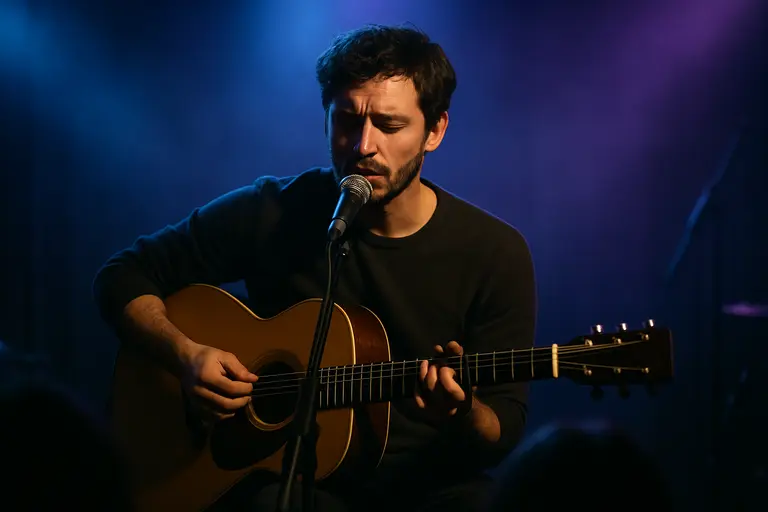
Designing Around Darkness And Timing
The word nocturne suggests night, quiet, and controlled shadow, while catawampus suggests tilt, dislocation, or comic imbalance. Those ideas can be served by lighting systems that move with performers, but the audio design has to leave space for that motion. If every sound is full-range, bright, and constant, subtle lighting changes may feel less meaningful.
In a performance setup, I would treat the lighting cues like arrangement markers. A bass pulse can mark the body’s weight. A filtered texture can hold the room in suspense. A sharper transient can justify a sudden shift in sidelight. None of that requires unverified gear claims. It only requires the audio and lighting departments to agree on cue language before technical rehearsals.
Remote tracking also supports costume and object work. If a handmade mask, sculptural garment, or prop is central to the exhibition, the lighting should reveal material behavior: fur edge, reflective bead, matte fabric, translucent plastic, or moving shadow. The ethical point is simple: gear should frame the artist’s decisions, not flatten them into a tech demo.
Where A Producer Fits In The Tech Plan
A music producer on this kind of project can help by building stems that support cue flexibility. Instead of one finished stereo file, the show might use separated drone, pulse, texture, vocal, and impact stems. That lets lighting rehearse against stable musical events while still allowing performance variation. It also reduces the risk of the light operator reacting to a dense mix with no clear markers.
For broader culture-and-tech reading across the same network, the site Next Clues offers insights into creative subjects adjacent to live events, media, and visual culture. This context can be helpful, but gear choices for the exhibition should rely on the space, the performers, and confirmed equipment functionality.
Nocturne & Catawampus Live Gear Decisions
What To Specify Before Renting Anything
Before choosing live performance gear, the production team would need a confirmed venue plan, audience format, performer paths, ceiling height, rigging limits, power availability, haze policy, accessibility requirements, and rehearsal schedule. Without those details, any equipment list would be speculative. The Martin Macula and Follow-Me 3D examples show what current tracking systems can make possible, but they do not prove that either system is right for this specific exhibition.
- Use remote follow-spot control if performer tracking supports the concept and the venue can support the rig safely.
- Keep the number of moving cues low enough that visitors can read the performance.
- Build audio stems with clear timing markers so lighting cues have musical reference points.
- Test costume materials under the actual fixture types before approving color and intensity choices.
- Treat tracking data and operator timing as rehearsal needs, not last-minute technical extras.
The strongest gear direction for Nocturne & Catawampus is not maximum brightness or maximum automation. It is controlled attention. Remote follow-spot systems and multi-fixture tracking can help a strange, night-driven performance feel intentional, but only if the cues are written with the artists rather than imposed after the work is built. For live performance gear, that is the standard I would use before calling any rental worthwhile.