
Most loop effects ask the performer to decide what should be captured before anything interesting can happen. Kaiq Electronics’ Memory Loop Slicer reverses that relationship. Its four-bar circular buffer is always recording, which means the phrase you just played is already available for freezing, slicing, reversing, rearranging, and recalling.
Kaiq Electronics released Memory Loop Slicer, or MLS, on October 18, 2026 for Windows and macOS in VST3 format. The plugin keeps the dry performance and manipulated loop on separate Main and Loop outputs while tracking the host transport.
That architecture makes the most recent four bars behave less like recorded history and more like temporary musical material.
A player can hear something worth keeping, reach backward into the buffer, freeze it, reshape it, and continue performing without stopping the original signal.
The Four-Bar Buffer Is Always Listening
The central idea behind Memory Loop Slicer is its continuously recording four-bar circular buffer.
Kaiq Electronics describes the system on the official Memory Loop Slicer page as a way to move through recent audio and recover moments the performer “almost missed.”
That matters because conventional looping often requires anticipation.
The musician presses record.
The phrase is performed.
Recording stops.
Only then does the loop become available.
MLS keeps the recent performance in memory automatically.
If the interesting moment happened a few beats ago, the player does not necessarily have to recreate it. The buffered audio is already there.
The four-bar duration is long enough to hold a short musical phrase while remaining small enough to feel connected to the current performance.
It acts like short-term musical memory.
Main And Loop Outputs Let The Performance Keep Moving
Memory Loop Slicer separates its audio into Main and Loop outputs.
Main carries the original signal.
Loop carries the captured and manipulated material.
This distinction is important for live use because transforming the buffer does not require replacing the performance that created it.
A synth part can continue through the Main output while a frozen fragment from several beats earlier repeats through Loop.
A guitarist could keep playing while an earlier phrase becomes a rhythmic layer.
A drum bus can continue normally while a recent fill is sliced into a stuttering pattern.
The two outputs can also receive different downstream processing in the DAW.
The loop could be heavily reverberated, filtered, distorted, or compressed without forcing the same treatment onto the original performance.
The recent past becomes another instrument layer rather than a destructive edit of the current one.
Loop Sizes Reach From Sixteenth Notes To Four Bars
Memory Loop Slicer can work with material ranging from 1/16 notes up to the full four-bar buffer.
That range changes the character of the instrument significantly.
A sixteenth-note capture behaves like a microscopic rhythmic fragment.
One bar can preserve a recognizable groove.
Four bars can retain an entire short musical statement.
Kaiq also provides Half and Double controls for restructuring loop length without stopping playback.
The company emphasizes that these length changes are repitch-free, meaning a shorter or longer loop does not automatically produce the pitch shift associated with simple tape-speed manipulation.
That keeps loop size focused on rhythm and structure.
A performer can therefore begin with a broad phrase and progressively narrow it into a tighter repeating cell.
The same audio becomes several different musical objects depending on how much of its timeline remains visible.
Navigation Makes Recent Audio Searchable
An always-recording buffer is only useful if performers can reach the right moment quickly.
Memory Loop Slicer includes navigation controls for moving backward and forward through its recent audio.
Kaiq describes this as moving through the four-bar buffer to find a moment that has just happened.
This changes the normal relationship between playback and history.
The buffer is not one static loop waiting for manipulation.
It is continuously refreshed by the performance.
The musician can choose where inside that recent history the active fragment begins.
Move adjusts the start position in sixteenth-note steps, while Phase provides finer timing alignment.
That gives the performer two scales of control.
Move handles structural repositioning.
Phase handles precision.
A kick can be shifted to a different place in the repeating pattern, or an almost-correct loop can be aligned more tightly with the host.
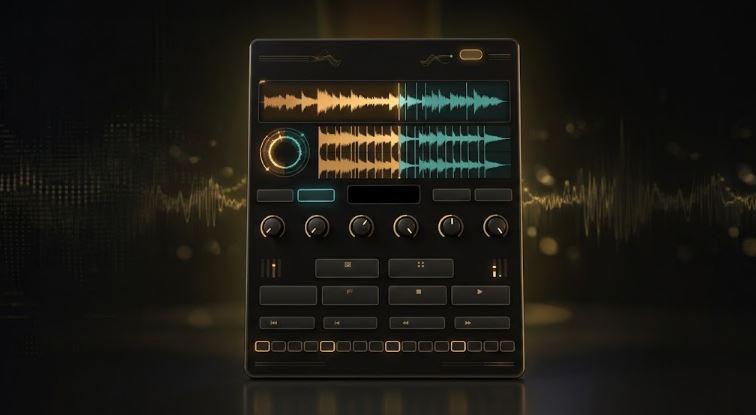
Freeze Turns A Moving Memory Into A Stable Object
The circular buffer continuously changes as new audio enters.
Freeze interrupts that process.
Once the performer finds useful material, Freeze preserves it so manipulation can continue without the source disappearing from memory.
That is the moment where recent history becomes an instrument.
The musician can stop worrying about what is entering the buffer and begin playing the captured structure itself.
Kaiq also includes Re-Freeze, making it possible to replace the held material with another moment later in the performance.
This supports a useful live cycle:
perform,
notice something interesting,
freeze it,
manipulate it,
return to the live signal,
then freeze something new.
Loop capture stops feeling like a separate production operation.
It becomes part of performance phrasing.
Chaos Rearranges Slices Without Leaving The Grid
Memory Loop Slicer’s Chaos control reorders slices while keeping the resulting pattern synchronized.
That distinction is important.
Random rearrangement can quickly destroy the timing relationship that makes a live loop usable.
Kaiq instead keeps the manipulated slices within the rhythmic grid.
The ordering changes, but the timing framework survives.
A straightforward drum pattern can become a more fractured rhythm.
A synth sequence can produce unexpected note orders.
A vocal phrase can become a rhythmic cut-up.
The performer gets variation without having to manually program every rearrangement.
Chaos therefore behaves more like an improvisational partner than a conventional randomizer.
It changes the sequence but respects the clock.
Pattern Lock Captures The Accident Worth Keeping
Randomness becomes more useful when good accidents can be preserved.
Pattern Lock handles that job.
If Chaos produces a variation worth repeating, Pattern Lock freezes the current ordering.
The Pattern Length control then becomes a window around that locked material.
A performer can reduce the active region to a small repeating cell or expand it again.
This turns randomness into a two-stage workflow.
First, generate possibilities.
Then choose one.
That distinction is critical for live electronic performance.
Constant randomization may create novelty, but it rarely creates a stable musical statement.
Pattern Lock allows an accidental pattern to become a motif.
The musician can perform around it before eventually releasing or replacing it.
Humanize Keeps Repetition From Becoming Completely Mechanical
Loopers are extremely good at repetition.
That strength can also become a weakness.
A perfectly repeated short fragment may begin sounding rigid after only a few cycles.
Memory Loop Slicer includes Humanize to introduce small timing differences from repetition to repetition.
Kaiq describes the feature as subtle variation intended to separate a pattern from a mechanical repeat.
This is especially useful with short loops.
A four-bar phrase already contains internal motion.
A one-sixteenth or one-eighth fragment can become obvious very quickly if every replay is mathematically identical.
Small timing differences can make those repeated events feel less fixed while retaining their rhythmic function.
The source does not change.
Its relationship with the grid becomes slightly less exact.
Shuffle And Offset Change Where Repetition Breathes
The plugin combines Shuffle and Offset around rhythmic displacement.
Shuffle applies a drum-machine-style swing relationship. Off-beat events arrive later while the overall paired duration remains stable, so the pattern does not progressively drift away from the host.
Offset changes the timing relationship between the sliced material and the main clock.
These controls can reshape a captured phrase without changing its source notes.
A rigid electronic pattern can gain swing.
A stutter can land around rather than directly on the original attacks.
A loop can interact with the live performance from a slightly displaced rhythmic position.
That makes timing itself part of the instrument.
The player is not merely choosing what fragment repeats.
They can alter how that fragment sits against the music still flowing through Main.
Gaps Lets Silence Become Part Of The Pattern
Memory Loop Slicer also allows slices to disappear.
The Gaps control progressively removes events from the repeating pattern.
That may sound like simple muting, but the musical effect can be significant.
Dense loops become more spacious.
A continuous hi-hat fragment can turn into a syncopated pattern.
A melodic phrase can lose selected events and expose a new rhythm underneath.
Kaiq also allows those gaps to interact with an Echo Tail derived from the last frozen moment.
This makes silence active.
A removed slice does not necessarily create an empty hole. It can create room for the processed residue of an earlier event.
The loop begins to alternate between direct fragments and memory of those fragments.
Decay Makes Repetition Change With Every Cycle
Decay shortens each repeated slice through an envelope that rearms as the slice triggers.
This is particularly useful when a very short fragment would otherwise dominate the mix.
Repeated hi-hats can become progressively tighter.
A melodic slice can shrink until it behaves almost like percussion.
A frozen phrase can seem to dissolve as repetition continues.
This creates motion without changing the original loop selection.
The performer captures one moment, but each repeat can have a slightly different envelope.
Memory Loop Slicer therefore treats repetition as something that can evolve rather than only recur.
Reverse Is Locked To The Musical Grid
Reverse processing is another familiar tool that becomes more useful when integrated into a live timing system.
Kaiq calls its implementation Grid-Locked Reverse.
The performer can reverse captured material while the larger beat relationship remains intact.
That reduces one of the difficulties of live reverse effects: entering and exiting them cleanly.
A reversed phrase can become part of the performance rather than a transition that requires careful offline preparation.
Short loops can produce rhythmic reverse gestures.
Longer material can become more recognizable backward phrases.
The host clock remains the reference throughout.
Twelve Memory Slots Turn Temporary Audio Into Recallable Material
The plugin provides 12 memory slots across two pages.
A performer can store captured material, recall it later, and trigger slots using native MIDI notes.
That extends Memory Loop Slicer beyond its rolling four-bar memory.
The circular buffer handles what just happened.
Memory slots preserve selected moments after they would otherwise have disappeared from that buffer.
Kaiq’s .mls snapshot and .mlsbank formats also store material for later use, with BPM information included.
The company says a bank can reopen in another project and adapt its loops to the new tempo.
Frozen loops, slots, Pattern Lock sequences, and parameter states are also serialized into the DAW project.
This means a spontaneous performance state can survive after the session closes.
The Plugin Can Turn Repetition Into Oscillator-Like Sound
Memory Loop Slicer also includes a sub-slice oscillator mode.
Once looping becomes sufficiently short, the distinction between rhythmic repetition and pitched sound begins to disappear.
Repeating a tiny piece of waveform quickly enough produces periodic motion that the ear can interpret as pitch.
This gives MLS another identity beyond a conventional looper.
A captured fragment can begin as a recognizable musical phrase.
The loop can shrink.
Smaller subdivisions can move toward buzzes, tones, and oscillator-like textures.
The instrument therefore covers a spectrum from four-bar musical memory down to microscopic repeating audio.
That range supports both performance looping and sound design inside the same buffer.
Live Memory Fits RobSonic’s Broader Sound-Design Approach
RobSonic’s existing guide to creative processing with reverb, delay, and distortion examines effects as tools for changing the musical role of source audio rather than merely polishing it.
Memory Loop Slicer follows the same principle through time.
It does not need a new oscillator or another recorded sample to create a second layer.
The performance itself supplies the material.
What changes is when that material is heard, how much of it survives, which slices repeat, and how the pattern relates to the live signal.
The performer essentially plays against their own recent history.
Memory Loop Slicer Is Designed More For Performance Than Editing
The October 18 Memory Loop Slicer release report confirms the always-on four-bar buffer, Main and Loop outputs, 1/16-to-four-bar loop lengths, Chaos, Gaps, Shuffle/Offset, Humanize, Decay, Pattern Lock, sub-slice operation, 12 memory slots, WAV export, and automation support.
Its design points clearly toward interaction rather than detailed waveform editing.
There is no need to stop the session, open a separate editor, locate a transient, export a clip, and load it into another sampler before manipulating it.
The audio is already in memory.
The musician responds while the moment still feels musically relevant.
That immediacy is the central idea.
Why The Last Four Bars Become A Live Instrument
Memory Loop Slicer changes the meaning of a buffer.
In many audio tools, a buffer is technical infrastructure hidden behind the interface.
Here, the buffer becomes the instrument.
The last four bars are always available.
Navigation finds the moment worth revisiting.
Freeze preserves it.
Half and Double reshape its structure.
Chaos rearranges slices.
Pattern Lock keeps the accident that works.
Humanize, Shuffle, Offset, Gaps, and Decay alter its rhythm.
Memory slots preserve selected fragments beyond the rolling buffer.
Main and Loop outputs let the performer keep playing while those memories develop into independent layers.
The important part is that none of this requires predicting which moment will matter.
Memory Loop Slicer remembers first.
The performer decides what was important afterward.
That makes the plugin less like a traditional looper waiting for a record command and more like an instrument built from the immediate past.