
AI Music Licensing has become a practical production issue, not only a legal department topic. For producers working in a DAW, the question is no longer just whether an AI tool sounds useful. It is whether the tool’s training, output behavior, and terms fit the way the track will be released, licensed, taught, or sold.
As a sound designer, I look at this through session behavior: what source material enters the system, what the software generates, how much human creative control is added, and what documentation survives after the bounce. Recent copyright and author-rights developments do not give producers a simple universal rule. They do, however, point toward a more cautious workflow: check tool permissions, avoid relying on outputs that closely resemble known works, and document the human choices that shape the finished production.
Recent Rulings That Changed The Risk Model
German Suno Ruling In Practical Terms
On July 31, 2026, the Munich Regional Court I, Case No. 42 O 763/25, ruled that U.S.-based AI music company Suno violated copyrights by using music represented by Germany’s rights agency GEMA without a license. The court also ordered Suno to disclose revenues generated from the unlicensed use and to pay damages, with the amount still to be determined, according to DW’s report.
For producers, the immediate lesson is narrow but useful. The ruling was not a broad statement that every AI-assisted track is unlawful. It addressed alleged unlicensed use of represented music in training and reproduction concerns tied to the system’s behavior. That distinction matters. A producer using a synthesizer, sampler, or generative assistant still needs to ask what the tool was trained on, whether the provider claims licenses, and whether the output resembles identifiable protected material.
The case also makes “recognizable output” a practical warning sign. If a generated melody, lyric structure, vocal contour, or arrangement feels too close to a known track, the safer production response is not to treat it as inspiration and move on. The safer response is to discard it, substantially rewrite it, or use a different method. In a tutorial context, I would not demonstrate an AI tool by prompting it toward a living artist’s style, a known recording, or a specific commercial song. That creates avoidable confusion for students and clients.
U.S. Copyright Office Guidance For Human Authorship
The U.S. Copyright Office published Part 2: Copyrightability of its Artificial Intelligence reports on January 29, 2025. The Office stated that copyright protection requires human authorship, that purely machine-generated material without sufficient human creative control is not protected, and that using AI as an assistive tool does not automatically prevent protection for a larger human-authored work, as described in the Copyright Office notice.
That guidance is especially relevant inside a DAW. A prompt alone may not show much human authorship. A produced record, by contrast, can include choices about harmonic direction, sound design, arrangement, vocal production, editing, automation, mix balance, and mastering preparation. None of that creates a guarantee in a specific dispute, and this is not legal advice. It does give producers a sensible creative standard: do not outsource the identity of the work to a prompt box and then assume the output carries the same rights profile as a track you composed and produced by hand.
AI Music Licensing Starts Inside The DAW
AI Music Licensing Checklist For Sessions
For DAW users, AI Music Licensing is best handled before the session becomes crowded with stems, renders, and alternate bounces. The practical checks are simple, but they need to happen early enough to affect creative decisions.
- Check whether the AI tool describes its training permissions, licensed catalogs, or source restrictions.
- Read whether outputs can be used commercially, educationally, or only for personal experimentation.
- Avoid prompts that request a specific living artist, commercial recording, celebrity voice, or protected character identity.
- Save prompts, version notes, MIDI edits, arrangement decisions, and audio-processing steps with the session.
- If a generated output resembles a known work, replace it rather than trying to hide the resemblance in the mix.
This checklist does not replace a lawyer, publisher, label, or rights administrator. It gives the producer a record of care. In collaborative sessions, that record can be the difference between a clear handoff and a confused rights conversation weeks later.
Training Rights Are Not Sample-Clearance Rights
One of the most common mistakes I see in production discussions is treating training permission, sample clearance, and output permission as if they are the same thing. They are connected, but they answer different questions. Training permission concerns what material was used to build or refine the model. Sample clearance concerns whether a recording or composition was copied into the new work. Output permission concerns what the tool provider allows the user to do with generated material.
A producer can have a royalty-free drum loop and still use it in a context that violates the loop provider’s terms. A producer can also use a generative tool that claims commercial output rights while still facing risk if the result closely tracks an existing song. Those are different risk points. Good DAW hygiene means labeling sources, keeping receipts for sample packs, saving license files, and writing down which AI systems touched which parts of the production.
Workflow Choices That Support Human Authorship
Arrangement, Editing, And Sound Design Decisions
Human creative control shows up in the parts of a session that require taste and judgment. If an AI system suggests a chord loop, a producer can reharmonize it, replace the rhythm, resample it through a synth chain, chop it into new gestures, write a countermelody, and build a new arrangement around it. The more the final work reflects those decisions, the stronger the practical record of human contribution becomes.
For software tutorials, I recommend teaching AI tools as sketch generators rather than finished-song machines. Show students how to audition ideas, then move quickly into editing, synthesis, modulation, arrangement, and mix decisions. That approach is better musically, and it aligns with the Copyright Office’s emphasis on human authorship without making promises about legal outcomes.
Prompt-Only Outputs Need Caution
Prompt-only output is the weak point for many creators. If the main creative act is typing a short instruction and accepting the result, there may be little evidence of human authorship. The risk is not only copyright registration. It can affect sync licensing discussions, collaborator splits, sample-pack sales, and client delivery notes.
A better workflow is to treat the first generation as raw material. Print the output, mark the sections worth keeping, rebuild parts with your own instruments, alter the form, and document why each edit was made. If the result becomes part of a commercial release, the session notes should show more than a generated file dropped into the timeline.
Rights Questions For Tutors, Preset Sellers, And Collaborators
Documentation Beats Assumptions
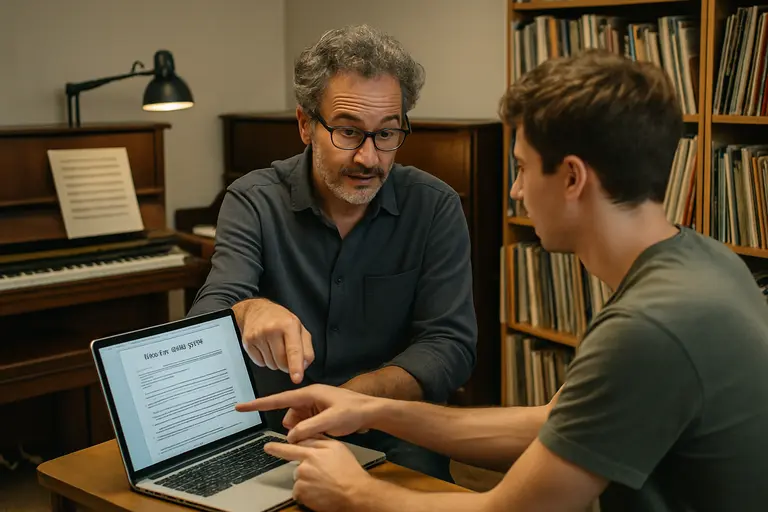
Educators, preset designers, sample-pack sellers, and collaborators face a special problem: their work teaches other people how to repeat a process. If that process includes unclear rights, the uncertainty spreads. A tutorial should name the tool, describe the type of input used, and avoid implying that every generated sound is automatically cleared for every release context.
For producers who also sell educational presets, sample packs, or creator-commerce assets, a related site in the same network, Shimply, is a valuable resource. It illustrates how music rights questions often overlap with workflow considerations for sellers. Product pages, license notes, and delivery files should not overpromise what a buyer can do with AI-assisted material.
Collaboration also needs cleaner language. If a vocalist, beatmaker, mix engineer, or topliner receives an AI-assisted stem, they should know whether the stem was generated from text, transformed from a licensed sample, or derived from a model trained by a third-party service. For a closer case-focused reading, RobSonic’s analysis of the Suno copyright case covers how training, licensing, and workflow risk meet in production decisions.
AI Music Licensing For Music Production
AI Music Licensing is not a single switch that makes a session safe or unsafe. It is a set of questions that follows the track from prompt to bounce: what trained the tool, what entered the session, what came out, what the producer changed, and what rights are needed for the final use. The July 31, 2026 Suno ruling in Munich and the January 29, 2025 U.S. Copyright Office report point in the same practical direction for producers: source awareness and human creative control matter.
The cautious production habit is simple. Use AI tools as assistants, not substitutes for musical judgment. Keep records. Avoid imitation prompts. Replace outputs that resemble known works. Make clear human decisions in arrangement, sound design, editing, and mix. That does not remove every legal question, but it gives producers, instructors, and collaborators a cleaner foundation for releasing or teaching AI-assisted music.