
Chicago beatmaking offers a useful way to study how theme, community, and arrangement choices affect a track before the mix bus gets crowded. Recent reporting on women artists and producers connected to Chicago points to a few grounded techniques: work inside limits, let hardware performance shape motion, and build sections around emotional intent rather than spectacle.
As a producer, I read those details less as scene mythology and more as practical studio information. A beat can start with a sample pack, an MPC, an analog bassline, a vocal concept, or a room full of peers giving feedback. What matters is how the producer turns that starting point into form: intro, drop, breakdown, transition, and return. The examples below stay close to the available reporting and avoid claiming that one method represents every woman artist in the city.
Why Chicago beatmaking Rewards Limits
Chicago beatmaking As A Constraint Practice
One of the clearest examples comes from Ace, an artist reported as participating in Flip a Beat Club Chicago. In the article “When Life Is Chaos, Make Art,” published on July 15, 2026, Ace used an MPC to create beats from supplied samples, with sessions connected to venues such as the Nighthawk in Albany Park and supported by live stream technology WPRL reporting. That detail is small, but it matters. Supplied samples remove the endless search phase. The producer has to make decisions from what is already in the crate.
For producers studying Chicago beatmaking, that is a strong exercise. Give yourself one folder, one drum program, and one hour. The goal is not to prove that limits are morally better than open sessions. The goal is to hear what happens when selection pressure speeds up arrangement. You chop sooner. You commit to a kick sooner. You find a hook through repetition, pitch, reverse edits, or silence because there is no option to keep browsing forever.
Community Critique Without Losing Your Ear
Flip a Beat Club Chicago also points to a social technique: group critique. A room-based beat session changes the producer’s sense of time. If other people will hear the loop within the same session, the arrangement has to communicate quickly. That does not mean every beat needs a dramatic first eight bars. It means the core idea should be legible enough that feedback can focus on rhythm, sample use, energy, and structure.
There is a useful caution here. Community feedback is not the same as outsourcing taste. A critique can reveal that the bass masks the sample, that the intro is too long for the idea, or that the drums need a clearer pocket. The producer still decides what serves the record. For readers who build live sets or public beat sessions, RobSonic’s related piece on audience engagement lessons connects well with this idea of testing arrangement choices in front of people without reducing the music to crowd response.
Arrangement Lessons From Machines And Mix Balance
Kate Simko’s Hardware Takeaways
Kate Simko’s LP PolyRhythmic, released on October 9, 2026, offers another set of beatmaking lessons. In an interview about the project, Simko discussed using vintage analog machines including the Roland 303, 707, and 606, along with the Juno-106 and Poly Evolver, while also working with digital processors. She also described recording drums and percussion on the fly with real-time filtering and mixer automation, and making multiple mixes per track to adjust balance Ask.Video interview.
That workflow is worth separating from gear nostalgia. The point is not that a Roland box automatically improves a track. The practical takeaway is that performance can be part of the arrangement. A filter sweep recorded during the take is not only sound design; it becomes section movement. A mixer mute can create a break. A percussion fader pushed too far for two bars can become tension, then relief when it drops back.
Mix Order As Arrangement
Simko’s comments about multiple mixes are especially useful for producers who treat arrangement and mixdown as separate jobs. In beatmaking, balance changes form. If the acid bassline dominates, the track reads as rawer and more rhythm-forward. If atmospheric melodic material comes up and percussion sits back, the same pattern can feel more spacious. That does not require adding ten new parts. Sometimes the arrangement changes because the hierarchy changes.
A practical test is to print three versions of the same eight- or sixteen-bar section. In one, push drums and bass. In another, push melodic texture. In the third, automate the handoff between them. Listen without touching the session. The best version may show that your arrangement problem was really a balance problem.
Turning Artist Themes Into Beatmaking Choices
Emotional Flow Before Technical Detail
Some recent Chicago-connected artist profiles in the supplied research emphasize emotional direction before technical detail. NeiaBFlyy, for example, was described as choosing beats that resonate first, then writing once a mood is established. Linda Sol’s work around MOTH was described in terms of storytelling, acoustic instruments, and dynamic shifts that mirror emotional arcs. Aelee’s “Sunflower” was described as drawing on hope and vulnerability after a Black Lives Matter protest, with folk and ballad textures entering a pop/R&B frame.
Those examples suggest a useful beatmaking question: what emotion should the arrangement protect? If the theme is grief, uplift, protest, or private reflection, the drum pattern should not be chosen only because it hits hard. The producer can use space, register, tempo feel, and section length to frame the lyric. A sparse verse may leave room for vulnerability. A brighter chorus may widen the harmony without turning the song into forced optimism.
Genre Shifts That Serve The Song
The research also describes Chicago producer/DJ Smoko Ono’s “Pull Up,” released in May 2026, as moving from an R&B-leaning structure toward disco and house grooves. That kind of shift can work when it is arranged as a gradual change in function. The vocal can begin as the center, while drums and instrumentation slowly invite movement. By the time the groove opens, the listener has been led there rather than abruptly relocated.
For beatmakers, the technique is simple to test. Start with a downtempo chord loop and vocal space. Add percussion in layers: rim, shaker, clap, kick, bass. Let the bass pattern become more repetitive as the section develops. Then introduce a four-on-the-floor pulse or a more dance-focused hat pattern only after the vocal idea is established. Chicago beatmaking can carry that kind of genre bridge without treating the shift as a gimmick.
Practical Studio Exercises For Producers
Build From One Supplied Sample
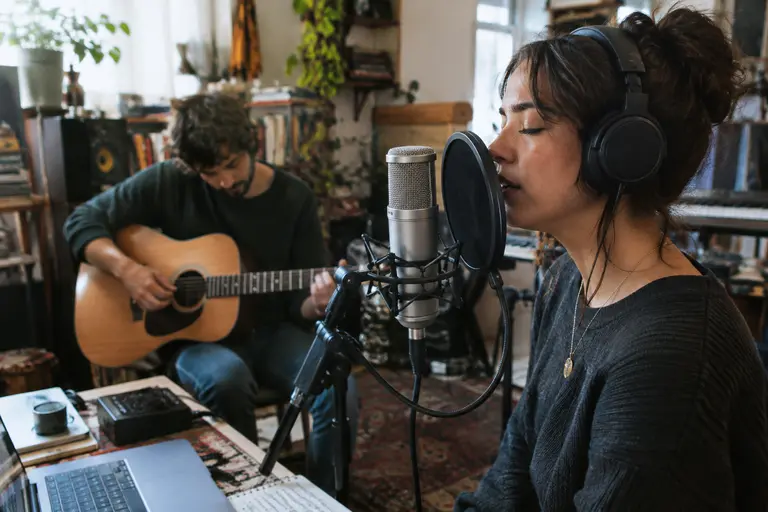
Try a constrained sample session modeled on the Flip a Beat Club approach. Use one supplied sample, an MPC-style workflow or pad controller, and a short deadline. Chop the sample into no more than sixteen pads. Build drums from either one kit or one small folder. Write an A section, then make the B section by changing only pitch, mute patterns, and drum density. This keeps the exercise focused on arrangement instead of plugin shopping.
- Set a timer for 45 minutes and stop browsing after the first five minutes.
- Use only one melodic source and one drum source.
- Create contrast through mutes, filter movement, velocity, and section length.
- Print the beat, then write down what changed between sections.
Record Automation Before Editing
The Simko example points toward another exercise: perform the arrangement before correcting it. Map filter cutoff, delay send, drum bus level, and one mute group to hardware controls or MIDI knobs. Record a pass through the full beat. Do not stop when a move is imperfect. After the take, edit only the moments that distract from the track’s intent.
This is where gear review habits help. The best controller or drum machine is not the one with the longest feature list. It is the one that lets you make repeatable musical decisions under pressure. If a device makes mutes, filters, and level rides easy to perform, it may do more for arrangement than a processor with dozens of unused options. For adjacent creator-culture coverage across the same network, a visit to Next Clues can provide insights into arts and media discussions that intersect with music practices.
What Chicago beatmaking Offers Producers
Chicago beatmaking, as shown through these reported examples, offers a practical set of arrangement habits rather than a single formula. Ace’s MPC work with supplied samples highlights constraint and public accountability. Flip a Beat Club Chicago shows how shared rooms can sharpen decisions without replacing personal taste. Kate Simko’s PolyRhythmic process shows how hardware performance, real-time filtering, mixer automation, and alternate balances can shape form from inside the take.
The cautious lesson is not that every woman artist in Chicago works this way, or that one city has a unified method. The supported lesson is narrower and more useful: recent examples point to beatmaking as decision design. Limit the source material. Perform some of the movement. Treat mix balance as part of arrangement. Let the theme decide how dense the drums should be. For producers trying to make better beats, those choices matter more than collecting more tools without a plan.