
Festival Sound Policies became a much more practical mixing concern after several 2026 weather disruptions affected major outdoor events. For producers, FOH engineers, system techs, and mastering-minded creators who think in frequency balance and headroom, the lesson is not only about rain delays. The sharper issue is how weather, curfews, low-frequency travel, public safety, and neighborhood limits can change the sound target during an event.
I’m looking at this as a producer and gear reviewer, not as a city official or legal adviser. The supported pattern from recent cases is clear enough to analyze carefully: severe weather can stop shows, atmospheric conditions can carry bass farther than expected, and local policy can push crews toward tighter sub control, earlier sound cutoffs, real-time monitoring, and stage orientation changes. None of that makes a mix better by itself. It does change the working rules for a live mix.
Why Festival Sound Policies Changed In 2026
Festival Sound Policies Under Weather Pressure
Festival Sound Policies are no longer only about a posted decibel ceiling at the edge of a site. The 2026 examples in the research point to a broader set of controls: pause authority during lightning, earlier outdoor sound endings, reduced bass levels, stationary and roaming monitors, community hotlines, and technical limits on subwoofers. Those tools sit right at the border between safety planning and audio engineering.
On September 25–27, 2026, All Things Go Festival—NYC and several other events were canceled after a nor’easter brought gusty winds, rain, and coastal flooding risk; organizers cited severe weather conditions after consulting local officials, according to Pitchfork’s report. That type of cancellation does not give a mix engineer much room to adapt. Once the event is called off, the audio policy has moved from level management to risk management.
What The Cancellations Showed
Other reported 2026 examples show a range of responses short of full cancellation. On October 10, 2026, HeadTrip Festival in Indio, California, suspended its show at Empire Polo Club after severe weather and lightning threats forced organizers to pause performances until safety could be assured. During a mid-September 2026 weekend, Shaky Knees in Atlanta, Riot Fest in Chicago, and Louder Than Life in Louisville were disrupted by thunderstorms, heavy rain, and lightning. At Shaky Knees, 60 mph wind gusts forced evacuation and performance pauses, while headliners still remained tied to an 11 p.m. curfew.
From a mixing perspective, those details matter because a pause is not neutral. System power, stage input lists, RF behavior, backline protection, line-check timing, and artist changeovers can all be affected. The show may resume, but the available mix time can shrink. A crew that expected a full set may need to bring the PA back cleanly, verify subs and fills, and restore the artist’s monitor world under pressure.
Bass Travel, Curfews, And Community Limits
Portola’s Measured Controls
The Portola Music Festival on September 28–29, 2026, gives one of the clearer supported examples of a policy response built around sound control rather than only emergency interruption. The City of Alameda’s page for the event stated that outdoor amplified sound ended at 10:45 p.m. on Sunday, 15 minutes earlier than in previous years, with lowered dB and bass levels, stationary and roaming sound monitoring, adjusted stage orientation, and a community hotline for real-time adjustments on the city’s Portola page.
For engineers, the key phrase there is “bass levels.” Low frequencies are the hardest part of a festival mix to contain because they are less directional than mids and highs, and they can remain noticeable at distance under certain atmospheric conditions. The research also notes that NiteHarts Music Festival at Snapdragon Stadium in San Diego drew noise complaints from neighborhoods up to four miles away in October 2026, with atmospheric effects such as cloud cover, wind, and humidity cited as allowing bass to travel unusually far. Organizers then used mitigation that included reduced low frequencies, subwoofer limiters, and capped overall sound.
Mixing Choices Under Caps
That kind of cap changes the creative problem. A dance or bass-heavy set often depends on physical low end, but a mixer under restrictions cannot simply push the subs harder. The better response is balance: high-pass nonessential channels, reduce overlapping kick and bass energy, keep sub information centered and controlled, and avoid letting effects returns build up in the low mids. These are normal mix decisions, but they become policy tools when community limits are active.
Country Thunder Alberta 2026, which had been scheduled for June 26–28, 2026, was canceled in the research notes because organizers cited a combination of new noise bylaws and construction, including bass limits reduced from 85 dBA to 80 dBA. That example should be treated carefully because the cancellation involved more than one factor. Still, the audio lesson is direct: a five-decibel reduction in a bass limit can change whether a large outdoor show is considered workable by organizers.
Safety Pauses Change The Mix Position
Lightning And Wind Are Show-Stoppers
Weather policies often define thresholds before the first act starts. The research notes cite a maplewoodstock policy in New Jersey stating that mild rain may not stop the show, but driving rain, dangerous winds, or lightning within an eight-mile radius can trigger a pause or cancellation by organizers or emergency personnel. Lakefront Music Fest in Prior Lake, Minnesota, is described as rain-or-shine, while also allowing shows to be interrupted and resumed when possible if weather intervenes.
For crews, the practical point is that sound policy and safety policy meet at the mute button. A PA may be technically capable of running in light rain, and a covered stage may protect some equipment, but lightning and dangerous wind are different risk categories. The audio crew’s job becomes disciplined shutdown, not heroic continuation. If a site has evacuation instructions, orderly exit takes priority over preserving the set flow.
Why Master Bus Thinking Matters
Festival engineers do not master a live show in the studio sense, but mastering habits can help under weather-driven limits. Good gain staging, conservative limiting, and a clear low-end target make it easier to respond when a production manager asks for a level reduction. If the mix is already slammed at the console, there is little room to lower SPL without making the performance feel dull or unstable.
A useful live approach is to build a mix with headroom first, then let the system tech align the PA to the site limits. If a storm pause creates a shorter restart window, the crew can return to known snapshots and measurement points instead of rebuilding the show by instinct. RobSonic has also covered related safety-minded live audio lessons in festival weather audio, especially where PA muting and adaptive reinforcement reduce risk.
Practical Mix Lessons For Crews
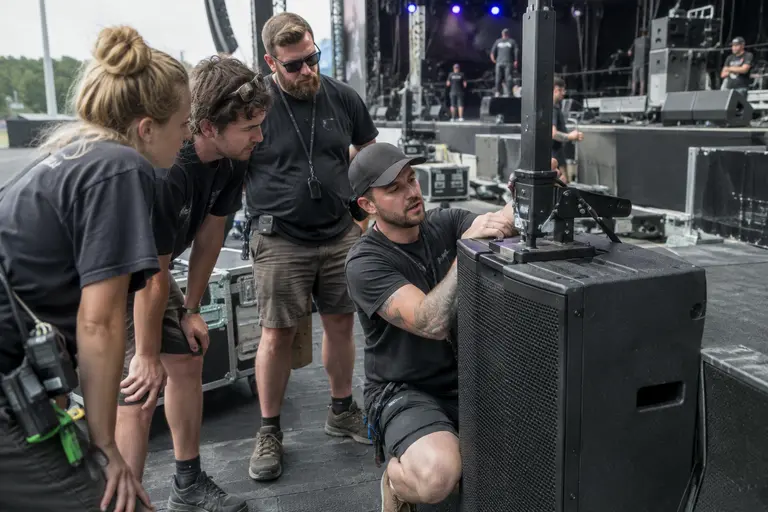
Low-End Control Before Loudness
The most repeatable lesson from the 2026 cases is that low-end control has to come before loudness. A festival mix that sounds impressive at FOH but sends uncontrolled sub energy into nearby neighborhoods can force policy changes during or after the event. Fair Park in Dallas was cited in the research notes after Breakaway Music Festival, where neighborhoods up to five miles away reported bass. City leaders then planned requirements such as inward-facing stage orientation, decibel limits in agreements, decibel readings during events, and mitigation plans for low-cloud or humid nights.
That points toward a production workflow where the sub array is treated as a civic and technical design issue, not only a vibe decision. Cardioid or steered sub approaches may help in some sites, but the supported facts here only show that orientation, monitoring, and limits were policy responses. Claims about a specific array fixing a specific festival would need site data, system drawings, and measurement logs.
Monitoring Beats Guesswork
Roaming monitoring and community hotlines may feel far removed from beatmaking, but they resemble the feedback loop producers use in the studio: listen in more than one position before trusting a balance. If a festival only judges sound from FOH, it may miss how the same low frequencies behave at the property line or across water, streets, and residential blocks. Weather adds another variable because wind, humidity, and cloud cover can change how sound carries.
For creators selling mixes, performing live electronic sets, or designing playback stems, the takeaway is simple: leave room for the live engineer. Over-limited stems, excessive sub layers, and wide-band distortion can make compliance harder. Cleaner stems with separated kick, bass, music, vocal, and effects groups give the festival mixer more ways to adapt without muting the musical identity of the set. For wider festival insight and adjacent events, NextClues follows related topics and coverage.
Weather Disruptions And Festival Sound Policies
Festival Sound Policies are becoming more specific because recent weather disruptions exposed how fast an outdoor show can move from entertainment to public-safety operation. The supported 2026 examples point to cancellations during severe systems, pauses during lightning threats, curfews that still applied after weather delays, bass complaints reaching miles away, and policy responses built around lower limits, sound monitoring, stage orientation, and real-time communication.
For mixers and producers, the creative response is not to make festival audio smaller. It is to make it more controllable. Keep the low end intentional, protect headroom, avoid over-processed playback stems, and respect pause authority when weather crosses the safety threshold. A strong mix should survive a level reduction better than a fragile mix that depends on maximum sub energy. That is where policy and craft meet: better control gives music a fairer chance to continue safely when conditions allow it.