
Surrealist Music Production is a useful phrase for producers who borrow from visual art without pretending that studio tricks alone create a movement. As of October 5, 2026, MoMA’s The Surrealist Book: Tomorrow Lives in Mirrors had opened on October 4, 2026, and the museum lists the exhibition as running through January 23, 2027. The show focuses on books and book-like works by figures including André Breton, Salvador Dalí, Unica Zürn, Max Ernst, Toyen, and Claude Cahun, with MoMA describing sculptural bindings, collages, sketchbooks, and hybrid volumes that push beyond the standard book format MoMA’s exhibition page.
For beatmakers and producers, the lesson is not to imitate Surrealist artists as a surface effect. The more useful reading is structural: fragments can be arranged so they create tension, misdirection, humor, memory, or dream logic. That matters in a DAW because sampling, resampling, reversing, pitch shifting, automation, and prompt-based audio tools all make it easy to join unrelated materials. The creative question is whether those combinations say something, or whether they are only unusual for a few seconds.
Surrealist Music Production Starts With Form
Surrealist Music Production And The Book As Object
MoMA’s exhibition frames the Surrealist book as more than a container for words or images. The research notes describe artist-books that use sculptural bindings, collage, sketchbook logic, and hybrid forms. In production terms, that shifts attention from individual sounds to the whole listening object. A track can be treated less like a straight line and more like a constructed volume: pages opening, sections interrupting each other, textures returning in altered form, and the mix itself acting as a space.
For a beatmaker, Surrealist Music Production can start with arrangement form rather than plugin choice. A drum loop might enter as a stable groove, then reappear as a filtered memory under a vocal chop. A field recording might sit in the intro as atmosphere, then become a rhythmic transient source. A harmony might be reversed before the listener hears it forward. None of these moves are automatically Surrealist, but they can echo the exhibition’s interest in books that behave as active objects rather than passive pages.
Collage Without Losing Context
Collage is one of the clearest bridges between Surrealist visual practice and modern production. Chopping audio into small units can create new meaning from old material, but context still matters. Producers should be careful not to treat every source as anonymous raw material. A sample can carry cultural, personal, and legal meaning even after it has been cut, stretched, or placed under drums.
That caution does not remove the creative value of collage. It makes the work stronger. If a producer wants a dreamlike arrangement, the source choices should have a reason: a room tone that suggests location, a vocal grain that suggests memory, a percussion layer that feels handmade, or a synth texture that destabilizes the groove. This is where older production habits can still help. Tape color, sampler limits, room feel, and human timing often support strange combinations better than constant polish, a point that connects with RobSonic’s piece on vintage music production.
Chance, Fragments, And Human Control
Prompted Audio Is Not Automatic Authorship
Prompt-based music tools have made chance and combination more visible in studio work. The Associated Press reported on Suno and Udio as AI song-generator startups that angered parts of the music industry while also seeking a place within it AP report. The research notes describe users entering descriptive terms such as style, instrumentation, or tempo, then receiving generated musical material that can be edited or reassembled.
The Surrealist comparison is tempting because prompts can produce unexpected pairings. Still, producers should avoid overstating the connection. Historical Surrealist methods involved authors, artists, objects, publications, and social contexts. An AI output is not the same cultural act. A more accurate studio takeaway is narrower: chance can be useful when a human producer sets limits, selects results, edits with intent, and remains alert to rights questions around sources, outputs, likeness, and commercial use.
A Studio Method For Productive Surprise
A practical workflow can borrow from the exhibition’s emphasis on fragments without turning the session into random sound collecting. The goal is to invite surprise while keeping a clear production frame. For many beatmakers, that means deciding what can change and what must stay stable. A kick pattern may stay grounded while the top loop mutates. A vocal texture may lose its words but keep its breath. A pad may be printed, cut into uneven pieces, and rearranged like visual collage.
- Start with a small set of contrasting sources: one rhythmic, one tonal, one noisy, and one environmental.
- Print short audio passes before heavy editing so chance events can be judged later.
- Use reversal, pitch movement, filtering, and silence to create interruption rather than constant density.
- Keep notes on sample origin, permissions, and session decisions before the track moves toward release.
This kind of process respects the difference between influence and replication. It also keeps the producer accountable. Strange combinations work best when the listener senses intention behind the fracture.
How Producers Can Apply The MoMA Lesson
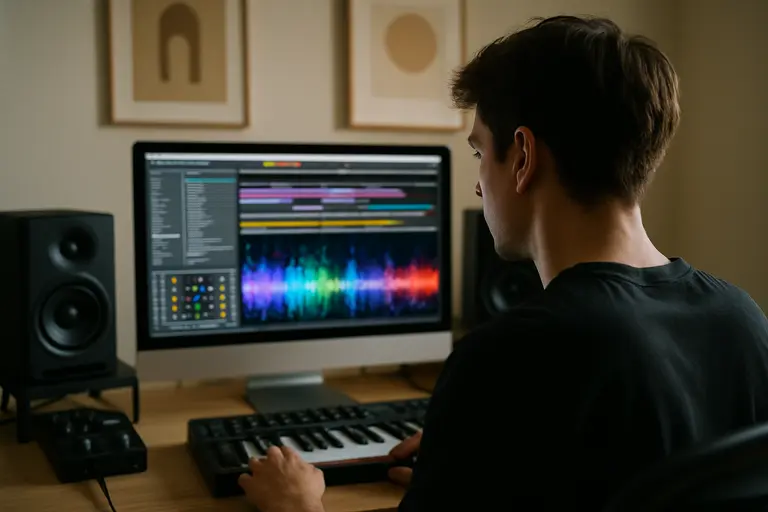
From Visual Collage To Sound Collage
MoMA’s presentation of Surrealist books gives producers a strong model for thinking across media. A sculptural book asks the viewer to notice touch, scale, sequence, and interruption. A track can ask similar questions through sonic means. How close is the vocal? Is the percussion dry or distant? Does the intro reveal the main idea, or does it mislead the ear? Does the final chorus resolve the earlier fragments, or leave them suspended?
Those are arrangement questions, not just sound-design questions. The exhibition’s focus on book-like works can push producers to think about packaging, visuals, interludes, transitions, and pacing as part of the same work. For readers tracking related culture coverage across this network, another valuable resource is Next Clues, which offers insights comparing how visual ideas circulate across creative fields.
Rights And Attribution Stay Part Of The Craft
Surrealist influence can make producers more adventurous, but it should not be used as a shortcut around clearance, attribution, or community respect. If a track uses samples from recordings, film dialogue, museum audio, found media, or recognizable performances, the producer should treat rights review as part of the production process. This is not legal advice; it is a studio practice point. Keeping source notes early is easier than trying to reconstruct them after a mix is finished.
The same caution applies to AI-assisted fragments. A producer may use a generated texture as a sketch, a transition idea, or a sound-design seed, but commercial release calls for careful review of platform terms, source risk, and artist identity issues. The most respectful approach is to use tools to develop one’s own composition rather than to imitate a living artist, community style, or identifiable performer in a way that could mislead listeners.
Surrealist Music Production After The Surrealist Book
Surrealist Music Production works best as a disciplined way to invite the unexpected. MoMA’s The Surrealist Book: Tomorrow Lives in Mirrors does not give producers a plug-in chain or a preset formula. It offers a reminder that form can be unstable, that fragments can argue with each other, and that an object can be read through touch, sequence, scale, and surprise.
For modern producers, that translates into practical choices: treat samples as charged material, build arrangements that can interrupt themselves, use chance systems with human judgment, and keep rights and attribution in the session file from the start. The strongest music will not come from decorating a beat with “dreamlike” sounds. It will come from making the track itself behave in a way that questions memory, order, and expectation while still giving the listener a reason to stay with it.