
NYFW Music Trends in 2026 gave producers a useful study in restraint, pacing, color, and brand identity. As a producer, I read fashion-week reports less as style news and more as creative briefs: What visual choices are designers repeating? How is sound supporting movement rather than fighting it? Which cues can help a beat, campaign loop, video intro, or live visual package feel more intentional?
The safest reading is not that every producer should imitate runway scoring. Fashion shows are built for garments, bodies in motion, cameras, and press assets. A three-minute runway cue has different needs than a club record or a sample pack demo. Still, NYFW FW26 and Spring/Summer 2026 reporting pointed to patterns that translate well into production practice: minimal arrangements, premium sonic identity, earthy palettes, fast engagement points, and more disciplined visual branding.
Why NYFW Music Trends Matter To Producers
NYFW Music Trends And Restraint
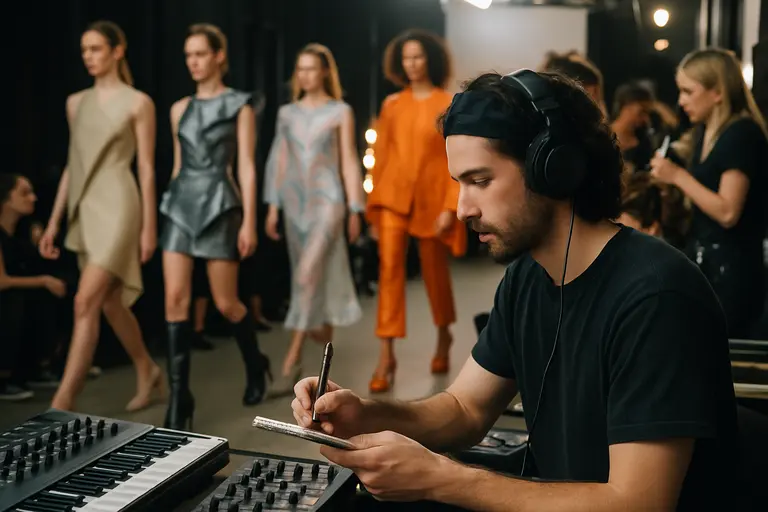
Universal Production Music’s February 17, 2026 report on scoring for New York Fashion Week described sound at NYFW 2026 as moving toward minimalism, with clean textures, restrained compositions, and subtle rhythmic movement supporting the runway rather than overpowering it Universal Production Music. That is a direct production lesson. A track can feel expensive, focused, and emotionally controlled without stacking every element in the session.
The strongest NYFW Music Trends from a beatmaking angle are less about specific drum kits and more about arrangement discipline. If the visual frame is already busy, the music may need fewer melodic events. If the garment movement is the lead, the cue may work better with pulse, texture, and negative space than with a dense topline. For producers making fashion films, short-form edits, or artist visuals, that suggests a practical rule: decide which element owns attention before adding more layers.
From Runway Timing To Beat Arrangement
Runway music has to mark entrances, turns, pacing changes, and exits. That does not mean producers should write only functional music. It means the arrangement must give editors and creative directors clear points of movement. A clean intro, a controlled build, and a restrained drop can be more useful than a loop that stays at one intensity for the full cue.
This connects with a broader production habit I trust: write in sections that can survive edits. A four-bar texture, an eight-bar pulse, a filtered lift, and a dry impact are easier to cut to picture than a crowded arrangement with no space. For a related production angle, RobSonic’s piece on NYFW soundtracks and production also treated restraint and sonic identity as practical tools rather than fashion buzzwords.
Color Palettes As Sonic Briefs
Moss Green Chocolate Brown Yellow Ochre
FashionUnited reported on February 18, 2026 that NYFW FW26 color trends included yellow ochre, moss green, and shades of brown, with black still present but less dominant in the season’s palette FashionUnited. That does not prove a direct one-to-one link between color and sound. It does give producers a useful mood board for visual branding and sonic texture.
Chocolate brown can suggest warmth, rounded low mids, tape-like saturation, and less brittle top end. Moss green can point toward organic ambience, softer modulation, and patient movement. Yellow ochre can support muted brightness: not neon, not harsh, but present enough to guide attention. These are interpretive moves, not scientific color-to-audio rules. The value is in building a shared language between producer, vocalist, stylist, designer, editor, and art director.
Translating Color Without Overclaiming
Producers should be careful not to claim that a color trend causes a sound trend. The evidence supports a softer claim: NYFW FW26 reporting showed earthy and muted visual palettes, while NYFW 2026 scoring coverage described restraint and clean sonic textures. Those two observations can sit together as creative prompts. They do not need to be forced into a single theory.
For a practical session, I would start with a limited palette. Choose one warm bass source, one dry rhythmic texture, one atmospheric layer, and one short melodic motif. Then build the cover art, teaser video, or live visual direction around the same emotional range. If the project also touches fantasy fashion, costume styling, or character-led visuals, a related reference point such as fantasy fashion ideas can help frame mood without copying protected characters or trading on someone else’s likeness.
Premium Sonic Identity And Creator Branding
Music As A Brand System
Universal Production Music’s NYFW 2026 report also identified premium sonic identity as a theme, with brands building coherent music palettes across runway shows, digital content, social clips, and advertising. For independent producers, that matters because the same idea applies at a smaller scale. A beat tape, artist rollout, plugin demo series, or sample-pack launch can feel more coherent when its music, cover design, video pacing, and typography all speak the same language.
That does not require a large budget. It requires fewer random decisions. If the project is built around restrained fashion cues, avoid switching from soft ambient branding to chaotic thumbnails to unrelated drum programming. If the project has a warm brown-and-ochre visual direction, choose sounds that support that identity: softened transients, muted keys, close-mic percussion, vinyl noise used with restraint, or synth pads that leave room for the vocal.
Strong Intros And Short Form Edits
The same Universal Production Music report pointed to strong intros and fast engagement for digital content tied to NYFW. That is familiar territory for producers working on social edits, reel hooks, and campaign teasers. The first two seconds often decide whether the viewer understands the mood. A soft reverse swell, a dry kick, a single string gesture, or a filtered vocal chop can set tone faster than a long ambient fade.
At PUBLIC SERV-CE’s NYFW FW26 runway on February 12, 2026, the brand premiered 16 new tracks by KayCyy Pluto, according to the research notes provided for this assignment. The reported blend of romantic violin solos with high-energy electronic and pulsating instrumentation is a good example of contrast as a fashion-scoring device. Strings can bring intimacy. Electronic pulse can bring speed. The pairing works when each element has a clear job.
What Producers Can Borrow Without Copying
Stage Wear Packaging And Video Direction
Fashion reporting around FW26 also described subtler silhouettes, understated tailoring, capes, shawls, ponchos, and timeless necklines. For producers, the lesson is not to turn every rollout into a runway reference. The more useful takeaway is shape. Sleek, architectural clothing can inspire cleaner cover layouts, sharper lighting, fewer props, and a less cluttered stage setup.
Here is a practical way to move from fashion reference to production choice without making unsupported claims:
- Pick one visual anchor, such as moss green, chocolate brown, or a tailored silhouette.
- Choose two sonic traits that match the mood, such as space, warmth, dry drums, or restrained melody.
- Build a short intro with a clear edit point in the first few seconds.
- Keep the arrangement readable so visuals, vocals, and garment movement are not crowded.
- Check rights and permissions before using brand marks, runway footage, celebrity likenesses, or protected characters.
Rights Caution For Fashion Inspired Work
Fashion inspiration can be productive, but creators should avoid presenting imitation as affiliation. Referencing a palette, silhouette, pacing idea, or mood is different from using a designer’s marks, campaign imagery, runway video, or celebrity likeness without clearance. This is not legal advice, but it is a sensible production habit: keep inspiration broad, document original decisions, and ask for permission when using someone else’s protected material.
That caution is especially relevant for producers selling beats, visualizers, merch, sample packs, or creator-commerce products. A mood board can guide the work, but the released asset should stand on its own. The goal is not to copy a fashion house’s identity. The goal is to learn from how fashion teams coordinate sound, color, motion, and timing.
What NYFW Music Trends Mean For Producers
Practical Production Takeaways
NYFW Music Trends in 2026 point toward a useful creative discipline: less clutter, clearer identity, and tighter links between sound and image. Minimalism can help a beat breathe. Earthy colors can suggest warmer sound design and calmer visuals. Premium sonic identity can push independent creators to think beyond one track and toward a consistent release system. Strong intros can make short-form edits more effective without turning every cue into a loud drop.
The producer’s job is still judgment. A quiet-luxury cue may need space and ambience. A high-energy fashion film may need pulse and sharper transitions. A fantasy-styled visual may need texture, but not imitation of protected characters or living artists’ signatures. The evidence from NYFW reporting supports these ideas as prompts, not fixed rules.
For my own sessions, the best takeaway is simple: treat the visual brief as part of the arrangement. Before adding another synth, ask what the frame needs. Before adding another drum layer, ask whether movement, color, or silence would say more. That is where fashion-week inspiration becomes useful for music producers: not as a trend to chase, but as a test of taste, restraint, and intention.