
Handmade goods are gaining renewed attention because they make authorship visible. In music production terms, it is the difference between a preset loop and a beat that carries the producer’s fingerprints: swing choices, source selection, texture, edits, and small imperfections that tell you a human made decisions. That does not make every handmade object better than every digitally assisted one. It does suggest that, as AI-generated images and product concepts become easier to produce at scale, craft can give buyers a clearer signal of effort, origin, and care.
The stronger argument is not nostalgia. It is market behavior. Craft, costume culture, artist merch, custom gifts, and small-batch objects give creators a way to communicate process in a crowded feed. A seller does not need to reject digital tools to make that point. A designer might sketch on paper, prototype in software, cut fabric by hand, and photograph the finished piece with careful lighting. What matters is whether the final offer gives the buyer truthful context about how it was made.
Why Handmade Goods Are Being Revalued
Handmade Goods As Human Signal
The clearest reason handmade goods still matter is that they carry a human signal that AI output often struggles to prove on its own. Buyers can see hand-stitching, brushwork, carving marks, glaze variation, bead placement, screen-print texture, and other traces of process. For creators, those traces operate almost like sound design choices in a track. They are not always perfect, but they can make the work feel specific.
Recent market figures support cautious interest in craft rather than a vague claim that everyone has turned away from AI. The global handicrafts market was valued at US $740 billion in 2024 and was projected to reach US $983 billion by 2030, while woodworking accounted for 26.71 percent of market share in 2024, according to a July 21, 2026 article where Forbes reported those figures. Those numbers point to a large category with room for many materials, price points, and buyer motivations.
Why Effort Still Reads Clearly
Effort is not only a production cost. It is part of how buyers interpret value. A hand-bound notebook, a custom stage accessory, a ceramic mug, or a carved wooden object can show time in the finished surface. That visible time can help a creator tell a more defensible story than a product listing built only around buzzwords.
For beatmakers, this has a familiar parallel. A drum break chopped from vinyl, a self-recorded shaker, or a synth patch built from scratch may not be technically cleaner than a factory preset. Still, it can carry identity. Craft objects work in a similar way. They give the audience evidence of selection and commitment, even before the seller explains the process.
What The Etsy Data Suggests
Scale Does Not Erase Individual Taste
The marketplace numbers show that handmade and custom commerce is not a tiny side note. In the year ended December 31, 2025, Etsy reported US $10.46 billion in gross merchandise sales, 5.6 million active sellers, and 86.5 million active buyers, while custom or made-to-order items accounted for about 30 percent of sales, based on Etsy marketplace data. That scale should be read carefully. It does not prove that every seller is thriving, or that every craft category is equally healthy. It does show that buyers continue to spend on goods where personalization and seller identity are part of the offer.
Made-to-order work is especially relevant in an AI-heavy visual environment because it answers a question many buyers now ask: what was made for me, and what was simply generated for anyone? Custom sizing, selected materials, name engraving, color choices, repaired vintage pieces, and costume adjustments all give the seller chances to document human involvement.
Creator Commerce Lessons
For music creators, merch designers, cosplay makers, and visual artists, the lesson is practical. A limited hand-printed run can sit beside a digital storefront. A producer can sell sample packs while also offering hand-numbered zines, cassette editions, embroidered patches, or small-batch clothing. The point is not to rank physical work above digital work. The point is to make the value proposition clear.
Documentation helps. Process photos, material notes, edition size, time spent, and care instructions all support buyer trust. Claims should stay specific. Saying that a necklace uses hand-wrapped wire is stronger than claiming it was made with love if the listing gives no evidence. Saying that a hoodie was printed in a small run is stronger than implying scarcity without stating quantities.
How Craft Fits Music And Costume Culture
From Merch Tables To Performance Identity
Live-event culture has always relied on objects that extend the memory of a night: shirts, patches, flyers, masks, jewelry, wristbands, tapes, and signed prints. In rave, punk, experimental electronic, and DIY scenes, those objects often work as social markers as much as products. They say where someone was, who made the work, and which community the buyer wants to support.
Costume and fantasy fashion communities add another layer because fit, material, movement, and durability matter in person. A headpiece, cape, corset, prop accessory, or festival garment is judged not only by how it photographs but by how it holds up during wear. Readers interested in that side of creator culture can compare related craft and styling notes at fantasy fashion and costume culture, where handmade presentation often intersects with performance, photography, and character-inspired dress without needing to copy protected characters or celebrity likenesses.
This is where caution matters. Handmade does not automatically mean ethically sourced, sustainable, original, or legally cleared. Sellers still need truthful descriptions, permission for licensed imagery where required, and care around likenesses, logos, and protected characters. This is not legal advice, but it is a useful operating principle for creators: human labor is valuable, yet it does not remove rights-clearance questions.
Where Digital Tools Can Still Belong
AI oversaturation does not mean every creator has to avoid software. Many artists use digital sketching, layout tools, production planning, inventory systems, or recommendation engines while still making physical work by hand. The line worth defending is disclosure and authorship. If a tool shaped the concept, say so when it matters to the buyer. If the object was stitched, carved, painted, printed, or assembled by hand, show that work with evidence.
This balanced stance is healthier than treating AI as a single enemy. Some buyers may accept AI-assisted ideation if the final craft is clearly human-made. Others may avoid it. Creators can respect both positions by being direct, not defensive. Clear process notes reduce confusion and make the product easier to evaluate on its own terms.
Practical Ways Creators Can Show Craft
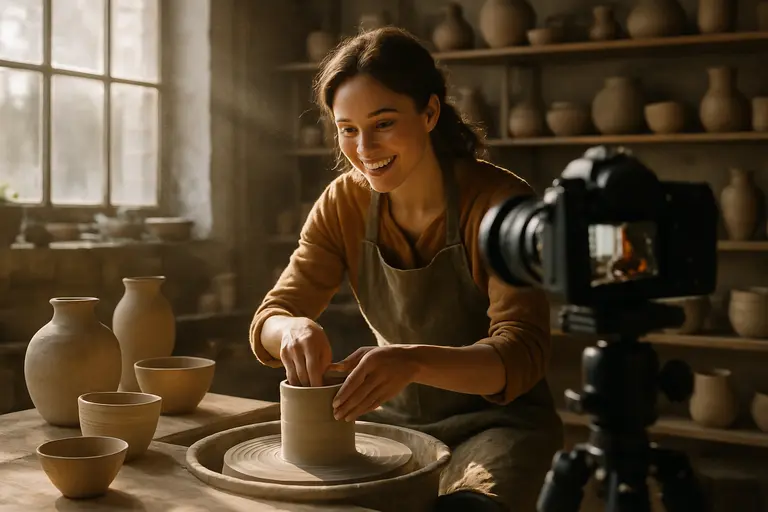
Make Process Part Of The Product
Creators do not need expensive campaigns to communicate craft. They need consistent proof. A short studio clip, a photo of raw materials, a note about tool choices, or a packaging card can do real work. The same thinking applies to producers showing beat sessions: the screen recording does not replace the track, but it helps the audience understand the choices behind it.
Useful signals include material origin where known, construction method, edition size, production time, repair policy, and whether an item is ready-made or made after purchase. These details also protect the creator from vague expectations. If a buyer understands that hand-dyed fabric varies from piece to piece, variation becomes part of the value rather than a defect.
- Use plain process language instead of inflated claims.
- Photograph details that show texture, scale, and finish.
- Separate original work from licensed, fan-made, or inspired pieces with care.
- State whether customization changes price, timing, or return options.
- Keep AI-related disclosures clear if generative tools shaped the concept or listing assets.
Price With Evidence, Not Apology
Pricing is one of the hardest parts of craft commerce. Materials, labor, platform fees, packaging, rejected prototypes, and photography all affect cost. A seller who explains those inputs does not need to apologize for charging more than a mass-produced alternative. At the same time, buyers should not be shamed for having budgets. A healthy craft market needs entry-level items, premium pieces, commissions, and educational content that helps people understand the spread.
For creators coming from music, this mirrors the difference between a free beat, a leased instrumental, a custom score, and a physical collector edition. Each offer can be valid if the rights, limits, and value are described clearly. The same logic applies to craft objects.
Handmade Goods Amid AI Oversaturation
Handmade goods have not returned because technology disappeared. They stand out because technology has made duplication easier and context more valuable. The evidence available from recent market reporting and marketplace data supports a careful claim: craft remains commercially significant, and custom work keeps a meaningful place in buyer behavior. It does not support a sweeping claim that AI-generated work has no value, or that every buyer now prefers handmade objects.
For creators, the best move is to treat craft as a communication system. Show the work. Name the materials. Credit collaborators. Avoid copying protected characters or living artists for commercial deception. Use digital tools honestly if they help the process. In a feed filled with fast visuals, the strongest handmade offer is not loud; it is specific, traceable, and grounded in the maker’s real decisions.