
Objects USA craft is useful to revisit because it shows how material choices can carry cultural argument, not only surface finish. The original Objects: USA exhibition premiered on October 3, 1969, at the Smithsonian National Collection of Fine Arts with more than 500 works by 308 artists working across clay, enamel, fiber, glass, metal, mosaic, and wood. Its stated ambition was not modest: it treated craft as part of fine art discourse rather than a side category. For artists, designers, and even music producers like me, that shift matters because it asks a practical question: what happens when the tool, the hand, and the material become part of the idea?
The answer is still being tested. Later reprises in 2019, 2024, and 2026 did not simply repeat the 1969 premise. They placed historic studio craft beside newer work concerned with identity, race, environmental pressure, memory, function, and social meaning. Those themes should be handled with care. No single exhibition can stand in for all craft communities, and influence rarely moves in a straight line. Still, the documented exhibition record gives artists a grounded way to read material culture as an active force in contemporary practice.
Why Objects USA Craft Still Feels Useful
Objects USA Craft As Material Thinking
Objects USA craft still feels useful because it frames craft as thinking through matter. A chair, vessel, textile, metal object, or glass form can hold decisions about weight, touch, labor, use, and symbolic value. That is different from seeing material as a neutral support for an idea. In studio craft, the material often argues back. Clay cracks, fiber stretches, wood carries grain, metal resists, and glass holds heat history. These physical limits can shape the work as much as an artist’s concept.
The 1969 exhibition was sponsored by S.C. Johnson & Son, and the collected works helped shape museum craft holdings after the exhibition circulated. The Racine Art Museum account describes how S.C. Johnson’s involvement affected contemporary craft and how many works later entered institutional collections. That matters because visibility changes how a field is studied. Once craft objects enter museum collections, they become available to curators, scholars, students, and artists as reference points.
As a producer, I hear an echo in sound design. A drum machine, tape loop, contact mic, or modular patch is not just a tool; it shapes the choices a producer can hear. In the same way, the artists connected to Objects: USA worked through material constraints rather than hiding them. The lesson is not to romanticize handwork. It is to notice that process can be part of meaning.
Function Without Reducing The Work
One of the more durable tensions in the project is function. Some historic works were close to furniture, jewelry, vessels, or domestic objects. Contemporary works in later versions could be more conceptual. That does not make one mode less serious than the other. Function can be a site of thought. A usable form carries assumptions about bodies, homes, labor, care, and access. A nonfunctional form may expose those assumptions by removing use or bending it into another register.
This is where artists can find a workable prompt: do not ask only whether an object works. Ask what kind of relationship it proposes. Who touches it? Who maintains it? What does it borrow from domestic space, ritual, industry, or display? Those questions keep craft from being reduced to polish or technique alone.
Material Culture As A Creative Method
Material Signals And Cultural Memory
Material culture is never blank. Fiber may point toward clothing, gendered labor, protest banners, or domestic repair. Wood may suggest furniture, architecture, carving, or regional building practices. Metal can imply industry, ornament, value, durability, or violence, depending on form and context. The strongest readings of Objects: USA do not treat these associations as fixed. They treat them as signals that artists can test, redirect, or complicate.
That caution is needed because craft history includes many communities, some of which have been under-credited in museum narratives. The later reprises of Objects: USA addressed this gap by placing identity and social context closer to the center of interpretation. The 2019 “Objects Redux” projects at Racine Art Museum and Houston Center for Contemporary Craft marked the 50th anniversary of the 1969 exhibition and paired historic works with contemporary works. The Houston Center for Contemporary Craft exhibition page states that the project examined how 50 years made craft contemporary.
For artists, this is less a style lesson than a method lesson. Start with a material and ask what histories it carries before form enters the sketchbook. Then ask whether those histories support the idea or risk flattening it. Respectful influence begins with research, not extraction.
A Sound Design Parallel For Makers
Objects USA craft also helps artists outside visual practice. In music production, texture can hold memory in the same way material does. A degraded cassette loop, an FM bell, a field recording of footsteps, or a bowed cymbal carries cultural and physical associations. The sound is not only frequency content; it is a trace of process. I often tell producers to print a rough pass before fixing every edge, because artifacts can tell you where the piece wants to go.
The same idea applies to objects. A maker may leave a join visible, exaggerate a seam, preserve a surface mark, or combine industrial and hand-formed components. Those choices can signal labor and context without turning the work into a lecture. The danger is overstatement. If every material decision is forced to “mean” too much, the object can feel closed. Strong work often leaves room for viewers to sense evidence before being told what to think.
Later Reprises And Contemporary Context
From 1969 To 2026
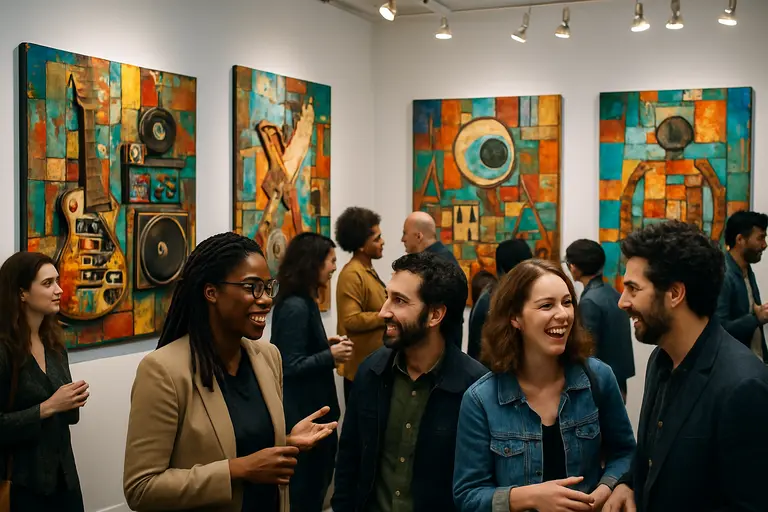
The exhibition history shows how the frame has changed. After its October 3, 1969 opening, the original show toured widely, including venues in the United States and Europe, and research records state that it reached more than half a million American viewers during its run. The 2019 anniversary projects reconsidered that legacy after 50 years. The 2024 iteration at R & Company in New York opened on September 6, 2024, ran through January 10, 2025, and featured 55 makers grouped through curatorial archetypes such as Insiders, Keepers, and Mediators.
On September 5, 2026, a reimagined Objects: USA opened at the Museum of Craft and Design in San Francisco, with a scheduled closing date of January 17, 2027. Research notes list more than 70 works and a mix of historical figures such as Wendell Castle, George Nakashima, and Art Smith alongside contemporary makers including the Haas Brothers, Roberto Lugo, Tanya Aguiñiga, and Nicole Cherubini. As of September 28, 2026, that exhibition had already opened and was scheduled to continue into January 2027.
The pattern across these versions is not a simple claim that craft became more political after 1969. Craft was never socially empty. A more careful reading is that later exhibitions gave stronger curatorial attention to identity, race, environmental concern, memory, and hybrid material practice. That shift affects how contemporary artists see older craft objects: not as isolated feats of skill, but as objects shaped by institutions, markets, communities, and bodies.
Careful Influence, Not Copying
For makers using Objects: USA as inspiration, the ethical path is not to copy a recognizable artist’s surface language. The better path is to study the problem each work raises. How does a form sit between use and display? How does material record touch? How does scale change the body’s response? How does a domestic reference change inside a museum?
A related RobSonic essay on historic craft signals makes a similar point: exhibition history is most useful when it becomes a way to test decisions, not a shortcut to borrowed authority. For adjacent culture coverage across the same network, Next Clues provides an insightful resource for readers interested in art, entertainment, and creative context.
Objects USA Craft As A Working Reference
The value of Objects USA craft for contemporary artists is practical. It gives makers a way to think about material, function, and cultural context in the same frame. It also reminds curators and audiences that craft is not only a category of objects; it is a set of relationships among labor, use, touch, display, and institutional recognition.
Artists can turn that into studio questions. What does the material already say before it is shaped? What histories does it carry? Does the object invite use, deny use, or imitate use? Is the work asking viewers to admire skill, question value, remember a community practice, or sense tension between industry and handwork? These questions can guide visual artists, designers, performers, and producers because they move beyond style into decision-making.
Objects USA craft should not be treated as a fixed canon that solves contemporary practice. Its history includes institutional power, sponsorship, collection building, and changing curatorial priorities. That makes it more useful, not less. It lets artists study how legitimacy is made, how materials move from studio to museum, and how later generations revise what earlier exhibitions left out. For a maker trying to build honest work, that is a durable source of creative pressure.