
Fashion aesthetic trends can look sudden from the outside, but the strongest signals usually build through exhibitions, runway styling, editorial reporting, and institutional decisions. For creators, the useful question is not whether one museum show or cancellation “caused” a trend. The better question is how public art framing, archival reference, and accountability pressure shape what designers, stylists, sellers, and visual-minded music producers feel comfortable quoting.
As a producer, I think about fashion the same way I think about a beat: one sample rarely explains the whole track. The groove comes from layers. In fashion right now, those layers include body-aware styling, Art Deco revival, modern-art color, tactile surface detail, and a more cautious attitude toward celebrating controversial figures. The evidence is uneven, so the analysis should stay measured.
Fashion Aesthetic Trends After Art Exhibitions
Fashion Aesthetic Trends In Body-Aware Styling
Recent exhibition framing has pushed fashion conversation toward garments as objects that perform on and around the body. Research notes on the Metropolitan Museum of Art’s “Costume Art,” open from May 10, 2026 through January 10, 2027, describe a show pairing historical and contemporary garments with art across roughly 5,000 years. That framing matters because it treats fashion less as seasonal product and more as bodily sculpture, surface, gesture, and social signal.
The cautious takeaway is that sculpted silhouettes, exposed structure, and body contouring should not be reduced to a single exhibition effect. Designers were already exploring those ideas before May 2026. Still, a major museum platform can help organize the conversation around them. It gives editors and stylists a language for talking about the body as architecture, not only as a hanger for fabric.
Surface Detail As Visual Rhythm
For beatmakers and stage-oriented creators, surface detail is where the fashion conversation gets especially useful. Patchwork, printed skirts, polka dots, tactile textures, and vintage-silhouetted capri pants were identified in Autumn 2026 reporting as micro-trends tied to surface play and nostalgic revival. Those cues work like percussion layers: a dot pattern can behave like hi-hat repetition, patchwork can feel like chopped sampling, and texture can create the visual equivalent of saturation or vinyl crackle.
This does not mean every creator should copy museum references into merch or styling. It means the visual logic is transferable. Contrast, repetition, interruption, and negative space are shared tools across clothing, cover art, stage design, and sound. A producer building a visual identity around a new EP could study how designers use surface rhythm before deciding how busy a sleeve, backdrop, or outfit should be.
What The Galliano Cancellation Changed
Cancellation As Institutional Signal
On August 31, 2026, the Metropolitan Museum of Art cancelled the planned “John Galliano: Horizons” retrospective after backlash over the designer’s history of antisemitic and racist remarks, according to AP reporting. The planned exhibition had been tied to the Spring 2027 Met Gala and, before cancellation, would have been only the third Costume Institute retrospective devoted to a living designer, following Yves Saint Laurent in 1983 and Rei Kawakubo in 2017.
The cancellation did not erase Galliano’s influence from fashion history, and it should not be discussed as if communities harmed by antisemitism or racism are background characters in a trend story. The institutional shift is more specific: technical skill, runway impact, and archival visibility are no longer enough to guarantee celebratory treatment without public scrutiny. That is a cultural decision as much as an aesthetic one.
Archive References Need Context
The practical effect on fashion aesthetic trends is likely to be restraint, not disappearance. Designers and stylists may still engage historical silhouettes, theatrical construction, and dramatic tailoring associated with late 20th-century and early 21st-century runway culture. But the Galliano cancellation showed that institutions and audiences can challenge how references are framed, especially when a living figure is being honored rather than studied from critical distance.
For RobSonic readers who track exhibition politics alongside style signals, our related piece on Galliano and fashion influence expands that institutional angle. The creator lesson is simple: citation is not neutral. If a visual idea comes from a charged archive, the safer creative path is to understand the source, avoid deceptive imitation, and make space for context rather than treating controversy as an edgy mood board.
Fall 2026 Signals Worth Treating Carefully
Art Deco And Drop-Waist Revival
Fall 2026 trend reporting has pointed to Art Deco revival, flapper-adjacent dresses, drop waists, geometric motifs, and ornamented construction. Who What Wear highlighted Fall 2026 dresses through a lens that included these period references and decorative cues. That is a real signal, but it should be treated as fashion-media evidence, not proof that every market or community has moved in the same direction.
Art Deco works well in fashion because it gives clear design rules: symmetry, stepped geometry, metallic shine, elongated lines, and controlled glamour. For a musician, those cues can translate into stagewear, release visuals, or synth-heavy branding without needing to mimic a historical garment. A chrome accent, a stepped poster layout, or a repeating geometric lighting pattern can capture the design language while leaving room for original identity.
Modern Art Color And Tactile Contrast
Research notes also point to Spring/Summer 2026 runway interest in modernist abstraction and bold primary color, with references to 20th-century painting and intense chromatic contrasts. The evidence supports a broader direction: fashion is leaning into visible construction, strong color decisions, and surfaces that read clearly from a distance. That matters for live-event culture because outfits, visuals, and merch often need to communicate under low light, movement, phone cameras, and crowded rooms.
The risk is flattening art history into a set of color swatches. Modernist painting, Art Deco ornament, and costume exhibition design come from different periods and cultural settings. Creators should avoid pretending those references are interchangeable. A stronger approach is to isolate one principle at a time: geometry, color blocking, bodily structure, or texture. Then test whether that principle fits the project’s sound, audience, and ethical frame.
Creative Prompts For Producers And Makers
Translate Shape Into Sound Design
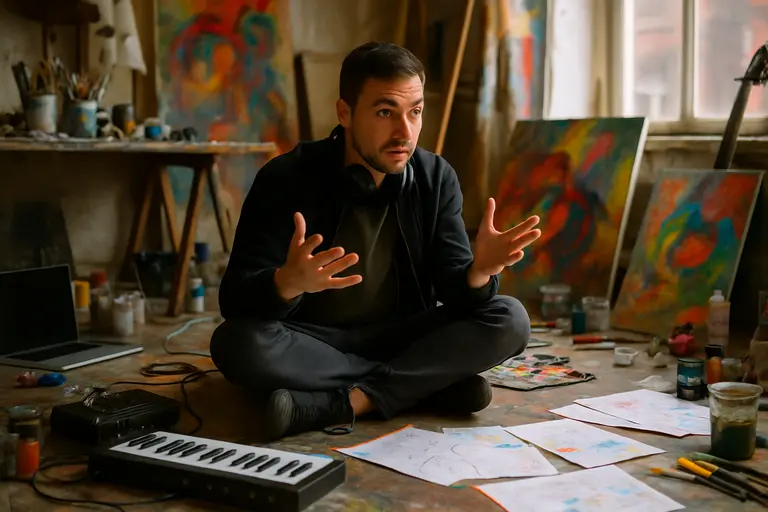
One useful exercise is to map visual structure to arrangement. A drop-waist silhouette can suggest delayed impact: keep the intro restrained, then let the groove land lower and heavier after the first phrase. Art Deco symmetry can suggest call-and-response synth patterns. Patchwork can suggest chopped vocal fragments or alternating drum textures. These translations keep the fashion reference conceptual rather than literal.
For sellers, stylists, and cosplay-adjacent creators, the same method applies. Study the principle, not the protected character, celebrity likeness, or living artist’s signature look. A fantasy-fashion reference archive, such as the site Fairytale Fashion, can serve as a valuable resource for observing garment shape and costume mood. However, commercial work still needs careful rights awareness and original execution.
Use Caution With Likeness And Archives
Creators should be careful with archival references, especially if products are sold. This is not legal advice, and no single article can decide whether a specific design is protected. Still, the creative principle is clear: avoid presenting derivative work as official, avoid copying a recognizable living artist’s style for commercial deception, and be cautious with celebrity likenesses or character-based prompts.
A mood board built around fashion aesthetic trends should include notes on source, period, designer, exhibition context, and what the creator is actually borrowing. Is it a color relationship? A silhouette principle? A texture contrast? A performance concept? Naming the borrowed principle keeps the work focused and reduces the temptation to copy the most recognizable surface.
Fashion Aesthetic Trends And Creator Context
The most defensible reading of the current moment is that exhibitions and cancellations are shaping fashion conversation through both inspiration and constraint. Exhibitions help frame garments as art, body sculpture, performance, and historical dialogue. Cancellations remind institutions and creators that celebration, authorship, and accountability are connected in public culture.
For musicians, sellers, stylists, and visual artists, fashion aesthetic trends are most useful when treated as signals rather than orders. Art Deco ornament, sculpted silhouettes, tactile surfaces, modern-art color, and archival drama can all feed a project, but they work best after being filtered through a clear creative purpose. The strongest work will not simply repeat what appeared on a runway or in a museum. It will understand the reference, respect the communities affected by the context, and turn the idea into something specific enough to stand on its own.