
Aftershock Performance Strategies give producers a useful case study because the October 1-4, 2026 festival in Sacramento was not only a large rock event. It was a four-day test of pacing, stage distribution, genre contrast, visual design, and audience energy at scale. The available reporting supports a clear reading: artists and organizers used familiar catalog moments, heavier nighttime builds, visual cues, and cross-generational booking to keep a large crowd engaged without treating every set the same way.
Pollstar reported that Aftershock 2026 drew 180,000 attendees across four days, hosted more than 140 artists on five stages, and introduced the Point Stage, while estimating the local Sacramento economic impact at around $40 million Pollstar reported. Those figures matter for producers because performance strategy changes when an event has to move large audiences across several spaces. A beat that works in a small room may need more obvious transitions, stronger hooks, cleaner low-end decisions, and clearer moments of release when scaled to a festival setting.
Scale, Scheduling, And Audience Distribution
Five Stages Changed The Energy Map
Aftershock 2026 used five stages, which likely helped distribute attention across the site rather than concentrating every audience movement around one or two points. The research does not provide exact foot-traffic data by stage, so any claim about crowd-flow success should stay cautious. Still, the basic structure is clear: more than 140 artists were spread across the weekend, and the added Point Stage gave the festival another place to program contrast.
For music producers, that scale suggests a practical arrangement lesson. Large events rarely reward a flat energy curve. Sets need sections that can pull in listeners quickly, reset attention, and create a reason to stay through the next transition. In a beatmaking context, that can mean placing a vocal chop, drum fill, synth switch, half-time section, or silence before the next drop. The live version of that idea appeared through scheduling: daytime sets, heavier nighttime moments, and headline-scale visual design each carried a different job.
Heat And Daytime Energy Required Smart Pacing
The first day, October 1, 2026, opened in high daytime heat above 90°F, according to the research notes. In that setting, crowd engagement is not only about loudness or speed. It is about pacing an audience that is physically managing sun, walking, hydration, and long set times. Early pop-punk and emo-oriented programming, including acts such as The Offspring and Mayday Parade, helped build energy before heavier nighttime sets. That kind of sequencing matters because emotional familiarity can bring people in before the most intense parts of a bill arrive.
What Aftershock Performance Strategies Showed About Arrangement
Aftershock Performance Strategies For Beatmakers
Aftershock Performance Strategies can translate into beatmaking without copying a live rock set. The key is structure. A festival set often has to balance recognizability with variation. If every song peaks the same way, the crowd can tire. If the set withholds too much energy, the crowd can drift. Producers face the same issue inside a three-minute track or a twenty-minute live beat set.
Queens of the Stone Age’s October 4 set, as described in the research, mixed recent material with familiar songs such as “No One Knows” and “Go With the Flow,” while using atypical intros or variations to create moments that felt specific to that performance. Riff Magazine reported that Queens of the Stone Age used large LED screens, glowing cables, and lighting effects, while Tool closed the weekend with visual treatments and lasers Riff Magazine noted. The production lesson is direct: variation does not have to erase recognition. A producer can keep the main motif intact while changing the entrance, stripping the drums, delaying the bass, or revoicing the hook.
Hits, Deep Cuts, And Reframed Moments
Festival sets often work because they balance instant connection with surprise. The research points to a scheduling and set-design pattern where recognizable songs sat beside less obvious catalog choices. That is not unique to Aftershock, but the 2026 edition offered a large-scale example. For producers, the equivalent is a beat tape, DJ set, or live performance that gives listeners familiar rhythmic anchors while saving less predictable textures for transitions, breakdowns, or bridges.
A useful studio exercise is to create two versions of the same eight-bar loop. Keep the core drums and bass in one version. In the second, change only the intro, mute one important element, or introduce a different top-line texture. That mirrors the festival practice of giving people the song or feeling they recognize while changing the route into it.
Visual Design As A Musical Arrangement Tool
Aftershock Performance Strategies And Visual Cues
Aftershock Performance Strategies also showed how visual design can behave like arrangement. Lighting, LED screens, glowing cables, and lasers are not audio tools, but they can clarify musical form. A lighting shift can mark a chorus. A blackout can make a downbeat feel heavier. A laser pattern can make a sustained section feel active even when the band holds the groove.
For producers working with live rigs, visuals should not be treated as a separate afterthought. Even a small setup can use screen color, projected abstract motion, or lighting changes to mark musical sections. The caution is that the research confirms visual elements for specific Oct. 4 performances, not exact programming details for every artist. The broader lesson is not that every Aftershock set relied on the same visual method. The better reading is that headline-scale acts used production design to reinforce musical impact.
This connects with practical live sound thinking: a dense visual moment can support a sparse musical section, while an already dense chorus may need cleaner lighting and clearer sound rather than more stimulation. For broader culture and entertainment coverage in the same network, nextclues.com tracks related event and creator topics. For producers, the practical value is in comparing how different live formats solve the same basic problem: keeping people engaged across time.
Genre Mixing And Intergenerational Programming
Rap, Punk, Metal, And Legacy Acts Shared Space
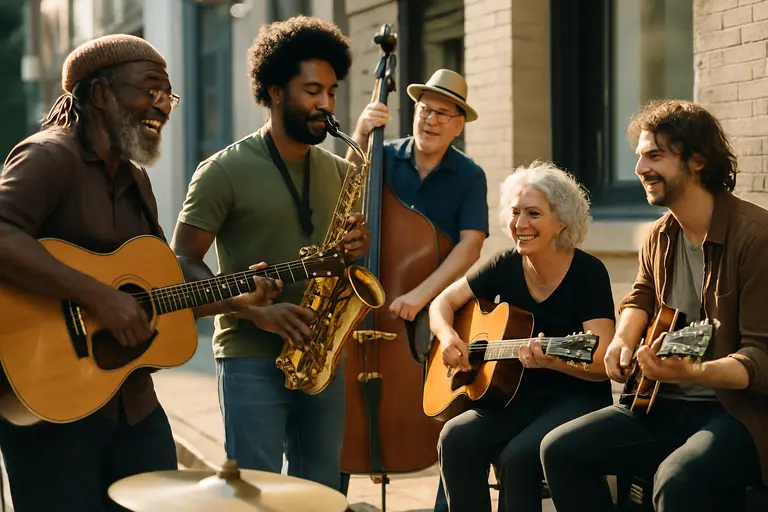
The 2026 bill remained rooted in rock, metal, and punk, but it also included rap and hip-hop-heavy acts such as Wu-Tang Clan, Three 6 Mafia, Public Enemy, and $uicideboy$. Headliners included My Chemical Romance, Tool, Limp Bizkit, and Pierce The Veil, with major established names and newer or niche heavy acts also on the bill. That mix supports a cautious point: Aftershock 2026 programmed heavy music culture as a broad audience space rather than a single narrow genre lane.
The audience dynamics described in the research also point to cross-generational engagement. Emo and pop-punk acts such as AFI, Sleeping With Sirens, Pierce The Veil, and The Story So Far energized younger listeners, while classic rock and metal acts attracted older fans during daytimes and earlier slots. This does not prove a universal market shift. One festival, even a record-setting one, cannot stand in for all listener behavior. But it does show that a large 2026 crowd responded to a bill where nostalgia, current heavy scenes, and hip-hop-rooted programming sat near each other.
Crowd Movement Was Part Of The Feedback Loop
The reported crowd behavior included active mosh pits, crowd surfers, and pogo moments, especially during high-energy acts. Stage diving was discouraged through signage. That detail matters because audience engagement is not only applause or social media reaction; it is physical response. In heavy music, movement can tell performers whether a tempo, riff, breakdown, or chant is landing.
Beatmakers can read this as a reminder to design for physical response. A crowd needs rhythmic information it can act on. Kicks need to be placed with intent. Breakdowns need space. Drops need contrast. If every section is full, the body has no cue for what changed. If a transition removes too much energy for too long, the room may lose momentum. Festival crowds can make that feedback visible at a scale studio producers do not always see.
Producer Takeaways From The Festival Format
The most useful lessons from Aftershock 2026 are not about copying rock, metal, punk, or rap acts. They are about how live performance decisions can inform production choices. A producer who studies the event can identify several repeatable principles:
- Use contrast between sections instead of relying only on loudness.
- Keep a recognizable motif, but change how it enters or exits.
- Build live sets around physical crowd response, not only track order.
- Pair visual cues with musical form so transitions feel clear.
- Respect genre communities by programming combinations that make musical sense, not novelty pairings for attention alone.
For beatmakers, the fifth point matters. Cross-genre work can be powerful, but it works best when the arrangement respects the source material and the audience around it. A rap-influenced section inside a heavy set needs more than a borrowed drum pattern. It needs space, cadence, low-end control, and an understanding of how the crowd will move. A punk or metal influence inside an electronic beat needs energy and texture, but also mix discipline so guitars, drums, bass, and vocals do not fight for the same space.
For broader culture and entertainment coverage in the same network, nextclues.com tracks related event and creator topics. For producers, the practical value is in comparing how different live formats solve the same basic problem: keeping people engaged across time.
Aftershock Performance Strategies In Practice
Aftershock Performance Strategies worked in 2026 because the festival combined scale with contrast. The confirmed facts point to a record-setting attendance figure, a five-stage structure, a broad artist count, cross-generational booking, rap and hip-hop presence within a heavy music setting, visible crowd movement, and headline production design on the final day. Those elements do not mean every set used the same method or that every audience segment reacted the same way. They do show how a large festival can keep multiple communities active across four days.
For producers, the strongest lesson is arrangement discipline. Build recognition, then vary the route. Use visual or sonic signals to mark change. Give crowds rhythmic cues they can feel. Treat nostalgia as one tool, not the whole set. Treat genre contrast with respect, not as a shortcut. If a beat, live set, or performance can make those choices clearly, it will stand a better chance of holding attention beyond the first impact.