
Fashion and Art can give music creators a practical way to think about sound beyond the DAW. For producers, beatmakers, performers, and merch-minded artists, the recent run of exhibitions connecting garments, bodies, craft, and fine art offers a useful reminder: a release is rarely only audio. The cover, clothes, stage light, rollout images, physical objects, and audience rituals all shape how people read the work.
I look at this as a producer first. A tight drum pocket or a strong vocal chain still matters. No exhibition can replace arrangement, mix balance, or songwriting. But exhibitions can sharpen how we frame music. They show how objects carry meaning, how collaboration changes authorship, and how audiences build identity around what they wear, save, photograph, and share.
What Fashion and Art Exhibitions Show Producers
Fashion and Art As A Body-Based Signal
The clearest music lesson from museum fashion shows is that clothes are not neutral props. At The Metropolitan Museum of Art, “Costume Art” opened on May 10, 2026 and is listed as running through January 10, 2027, with 12,000 square feet of new galleries pairing fashion with artworks to examine clothing and the body from prehistoric to contemporary examples Artguide notes. As of October 27, 2026, that exhibition was not a future event; it was already on view.
For music creators, the useful point is not to dress louder for its own sake. The point is to make visual decisions that carry the same intent as the production. If the record is sparse, brittle, and intimate, a crowded visual identity can blur the message. If the music is theatrical, layered, and high-contrast, the visual system may need more scale. Stage wear, a press photo, and a merch object can all operate like arrangement choices: they add, subtract, frame, or distract.
The Museum at FIT also gave creators a grounded case study. “Art X Fashion” ran from February 18 to April 19, 2026 and included more than 140 items across garments, accessories, textiles, photographs, and artworks while tracing fashion-art dialogue from the 18th century to the present Harper’s Bazaar reported. That wide date range matters because it pushes against the idea that cross-disciplinary work is only a recent branding tactic.
Historical Reference Without Copying
Producers can learn from historical fashion references without treating art history like a preset bank. A sample-minded creator already understands context: the source, edit, permission status, and final use all affect meaning. Visual reference works in a similar way. Looking at past silhouettes, materials, rituals, and craft methods can help an artist build a visual language, but direct imitation of a living artist, designer, or recognizable character for commercial deception is a different risk zone.
A safer creative question is: what principle am I responding to? Maybe it is contrast, restraint, symmetry, distress, ornament, repetition, or bodily exaggeration. In music terms, that is like borrowing a production principle rather than replaying the same melody. A producer inspired by sculptural garments might write with abrupt negative space, wider stereo placement, or low-end shapes that feel architectural. A vocalist inspired by handmade textile work might use stacked harmonies, visible process clips, or limited-run packaging that emphasizes touch.
How Visual Systems Can Support Music Releases
Translate Exhibition Thinking Into A Rollout
Fashion and Art can help artists make rollouts feel more coherent without forcing every element to match. An exhibition usually builds relationships among rooms, objects, captions, scale, lighting, and movement. A music release has similar parts: the single cover, short-form clips, email copy, live intro, outfit, backdrop, merch, and after-release edits. If those pieces point in totally different directions, the audience may still enjoy the song, but the project can feel less clear.
One practical studio exercise is to write a one-sentence visual rule before finishing the rollout. For example: “Everything should feel like damaged chrome and warm breath,” or “Everything should feel handmade, close, and slightly uneven.” That sentence does not replace art direction, but it gives collaborators a shared filter. A photographer, stylist, motion designer, or stage tech can then make choices that serve the same emotional target as the track.
Fashion exhibitions also remind us that the body is part of reception. On stage, the body is rhythm, silhouette, and pacing. A producer performing behind controllers can still shape the read: standing position, hand visibility, lighting height, garment movement, and camera angle all affect how the audience understands the performance. This is not about pretending to be a fashion house. It is about respecting presentation as part of the musical event.
Collaboration Should Change The Work
For a producer, Fashion and Art collaborations are most valuable when they affect the finished piece rather than just decorating it. If a visual artist builds cover art after every song is complete, the result may still be strong. But a deeper collaboration can happen earlier: a designer shares texture studies before drum programming begins, a photographer sends lighting references that influence synth tone, or a dancer’s movement changes the tempo map.
That does require clear boundaries. Music creators should be careful with rights, likeness, and ownership discussions before public release. This is not legal advice, and each project can differ by agreement and location. The practical habit is simple: write down who contributed what, how work may be used, how credit appears, and whether future edits, merch, or paid campaigns are included. That habit protects trust and reduces confusion after a project gains attention.
There is also an audience angle. Fans often build meaning around objects: a shirt, patch, zine, ticket stub, USB, cassette, print, or handmade item. For creator-commerce thinking around those objects, related network resources such as Shimply can be useful as a general reference point, especially for artists thinking about how physical goods connect with identity and community.
Practical Studio Lessons From Exhibition Logic
Use Contrast Like A Curator
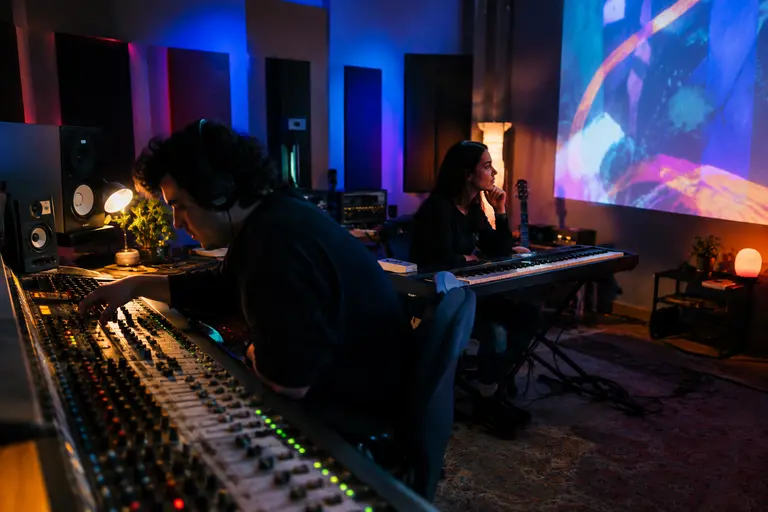
Curators often place objects so one sharpens the reading of another. Producers can do the same inside a beat. A dry vocal can make a huge reverb return feel larger. A plain drum pattern can make one distorted fill hit harder. A minimal outfit can make one striking accessory carry more weight. Contrast is not only a design idea; it is an arrangement tool.
Recent fashion-art exhibitions in the research notes point toward bodies, craft, architecture, performance, Black diasporic style, couture construction, and interdisciplinary staging. The cautious lesson is not that every artist now needs immersive rooms or high-budget garments. Most independent creators do not have museum resources, and claiming otherwise would be misleading. The useful lesson is scale-relative: even a small show can have a considered entrance, a color rule, a tactile merch item, and a visual cue that returns across the set.
- Pick one visual principle for a release before choosing fonts, clothes, or props.
- Ask collaborators to respond to the song’s mood, not only the genre label.
- Build one physical object that fans can use, wear, save, or display.
- Clear permissions and credits before selling merch or posting campaign assets.
- Let silence, negative space, and restraint guide both visuals and arrangement.
For more exhibition-based creator prompts, RobSonic’s related piece on fashion influence in art connects similar museum cues to practical music-making decisions.
Branding Is Repetition With Variation
Good branding for musicians often behaves like a motif in production. It repeats enough to be recognized but changes enough to stay alive. A snare tone, a recurring vocal texture, a color palette, and a garment shape can all become signatures. The mistake is repeating the surface without the reason. If the visual motif does not connect to the music, it may feel like packaging rather than expression.
A cautious evidence-based reading of the 2026 exhibition material is that fashion, art, and performance continue to overlap in institutional spaces. That does not prove every audience wants the same kind of cross-disciplinary rollout. It does suggest that music creators have room to treat visual identity as part of the composition process, not an afterthought handled only after mastering.
Fashion and Art Takeaways For Music Creators
Fashion and Art gives producers a useful mirror for release strategy because both fields deal with material, body, memory, authorship, and public meaning. The strongest lesson is discipline. Do not add visual ideas because they look expensive or signal taste. Add them because they clarify the sound.
If you are building a beat tape, EP, live set, or merch drop, start with the same question I use in the studio: what should the listener feel before the first downbeat, during the strongest section, and after the sound stops? Once that is clear, clothing, cover art, set design, edits, and physical objects can support the answer. The recent exhibitions are valuable because they show that presentation is not separate from meaning. For music creators, that is not hype; it is a practical production note.