
Local Festival Artists sit at the center of a hard question raised by Aftershock’s 2026 pricing: if a major festival becomes more expensive for audiences, what happens to the developing acts, producers, and scene builders who need that crowd most? As a producer, I read ticket data less as gossip and more as a signal. Higher prices can support staging, security, staffing, artist fees, and site buildout, but they can also change who attends early sets, who can afford to bring a crew, and which local acts are seen as worth the risk.
Why Local Festival Artists Need Price Context
Aftershock offers a useful case because the price change is unusually clear in the available reporting. TicketNews reported that Aftershock’s average single-day general admission price rose from US$65 in 2015 to US$235 in 2026, a 264% increase, the largest increase among 31 U.S. music festivals in its analysis TicketNews pricing analysis. That does not prove that local acts were harmed. It does set a serious frame for asking who benefits from a more expensive festival model, and who may face steeper barriers.
Ticket Price Data Sets The Frame
Price growth at a major festival can reflect many costs at once. Large stages, heavier touring packages, staff, insurance, power, barricades, video, lighting, and site operations all need funding. A higher ticket price is not automatically unfair, and a cheaper ticket is not automatically better for artists. The more useful question is whether the rising price also supports a stronger local artist path, or whether the extra value is concentrated mainly in headliners and premium amenities.
For producers, this matters because the local slot is rarely just a performance slot. It can be a testing ground for new arrangements, guitar tones, playback rigs, vocal chains, and crowd pacing. If early-stage audiences shrink because prices limit casual attendance, the feedback loop gets weaker. A local heavy band, electronic act, or hybrid producer may still play the stage, but the room energy can feel different if only the most committed ticket buyers arrive early.
What Local Festival Artists Can Measure
Local Festival Artists can treat price pressure as a data problem, not just a frustration. Useful signs include set time, stage location, crowd flow, merch conversion, local press attention, and whether the slot leads to club dates after the festival. A low-billing set can still be valuable if it creates repeat listeners. A high-profile slot can disappoint if it is isolated from the artist’s real community.
The key is to avoid measuring success only by the festival logo on a poster. A festival appearance should be judged by what it creates after the set: mailing-list growth, streaming lifts that can be verified by the artist’s own dashboard, direct merch sales, promoter relationships, and recorded live content that can be cleared and used responsibly.
Aftershock Prices And The Access Problem
Aftershock 2026 took place on October 1-4, 2026, so the pricing question is now retrospective rather than promotional. The lesson is not whether anyone should have bought a pass. The lesson is how a fast-rising ticket structure can affect the cultural role of a festival after the gates close.
Audience Access Shapes Local Response
Local scenes often depend on mixed audiences: devoted fans, curious friends, musicians from nearby bands, students, venue regulars, and people who are willing to take a chance on an unfamiliar act. When the cost of entry rises, that casual layer can become harder to reach. This is especially relevant for artists placed earlier in the day, where discovery is part of the value proposition.
There is uncertainty here. The available data does not show a direct Aftershock attendance-by-slot breakdown for local performers, and it does not prove that higher prices reduced crowds for any specific Sacramento act. A cautious reading is better: price growth increases the need for transparent local programming, because the audience’s cost of discovery has gone up.
Community Spending Is Not The Same As Stage Access
Local procurement and local stage access are related, but they are not the same. A festival can hire local vendors, production workers, food operators, or service providers while still booking few local artists. Both matter. The creator economy around a festival includes bands, DJs, designers, stagehands, photographers, merch sellers, engineers, and small businesses. For readers tracking creator-commerce ideas beyond music, Shimply in the same broader network highlights independent maker culture.
From a music production angle, the artist piece should not get lost. Local performers bring regional sound, genre memory, and community trust. In heavier music, that might mean a Sacramento-area band with a specific live intensity. In electronic or hybrid scenes, it might mean a producer whose low-end choices and tempo range reflect local clubs more than national festival formulas.
What Booking Structures Signal To Producers
Booking structure tells artists what kind of opportunity they are really receiving. Academic work on festival effects has raised concerns that smaller artists can be affected by radius clauses and booking restrictions tied to large festivals; one study focused on Boston Calling and the local concert industry is available through Drexel festival research. The point is not to assume the same outcome at every event. The point is that large-festival booking rules can shape the club ecosystem around them.
Submission Paths Affect Who Gets Heard
The research notes indicate that Aftershock was not taking general band submissions during the referenced period, with unsigned or local hopefuls directed instead toward programs and contests connected to the organizer’s wider channels. That kind of pathway can be useful if it is clear, reachable, and judged with care. It can also frustrate artists if the route feels distant from the local venue circuit where they have already built support.
Producers should read these systems practically. If a direct submission path is closed, the artist team needs other proof: strong live footage, clean stems for playback checks, a short stage plot, consistent draw at local rooms, and a release schedule that shows the act can support a festival set with real audience activity.
Local Bills Can Still Serve Sound Goals
A local booking is not only a community gesture. It can improve a festival’s sound identity. Local acts can bring textures that touring packages may not: regional vocal phrasing, underground subgenre blends, DIY synth rigs, tuned-down guitar approaches, or percussion choices shaped by nearby venues. For sound designers, that is valuable. It keeps a festival from becoming only a sequence of large touring templates.
That said, local slots need production respect. A short line check, unclear monitor plan, or rushed changeover can flatten an artist’s set before the crowd has a chance to respond. If rising prices are partly justified by production scale, local artists should be part of that production care, not an afterthought.
Sound Design Lessons From Higher-Priced Festival Stages
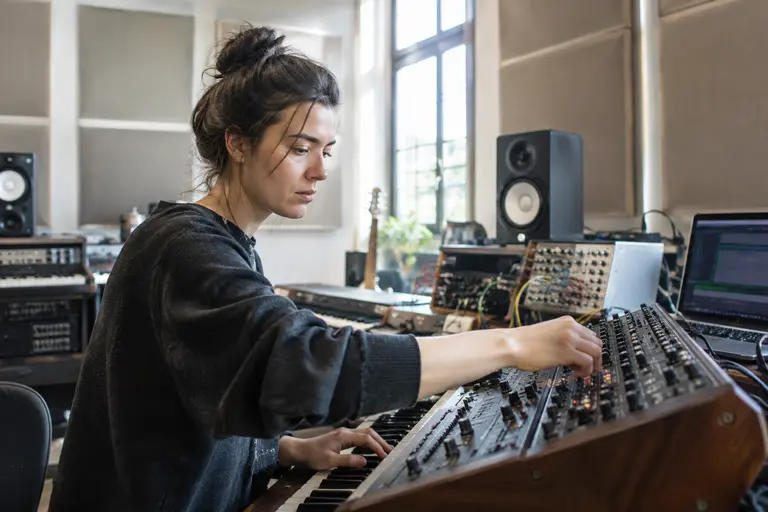
Major festivals teach producers how songs survive outside the studio. A mix that feels wide and detailed in headphones can lose impact on an outdoor stage if the low mids are crowded, the kick and bass are fighting, or backing tracks mask the live vocal. Higher-priced festivals often raise audience expectations, so smaller artists need efficient stage-ready sound rather than only polished recordings.
Design For Short Changeovers
Local Festival Artists should design live rigs that can be set, checked, and recovered quickly. That means fewer mystery boxes, clear labeling, saved synth patches, redundant playback, and a stage plot that does not require a long explanation. A producer-heavy act should decide which parts must be live and which can be safely printed. If a sub bass patch is central to the song, it needs to translate on a large PA without overwhelming the front-of-house mix.
The best live production choices are often simple. One reliable sampler, one controller mapped with discipline, and stems grouped by function may beat a complex rig that looks impressive but slows the crew down. For local artists trying to win trust at a major event, professionalism is part of the sound.
Make Synth Parts Translate
For synthesis-based acts, festival playback changes the job of a patch. A supersaw pad, distorted bass, or granular texture can be exciting in a studio mix, but it needs room around the vocal and drums outdoors. Producers should check mono compatibility, avoid excessive sub information in non-bass elements, and decide which textures are musical detail versus stage clutter.
This is where local acts can use their home venues as test labs. If a patch works only in the studio, rebuild it for the stage. If a transition depends on a long reverb tail, check whether that tail becomes mud when the band is loud. The festival version of a set may need fewer layers and clearer movement.
Practical Moves For Local Artists And Promoters
The Aftershock pricing data points toward practical choices rather than easy blame. Artists can prepare stronger festival-ready packages. Promoters can make local pathways clearer. Festival teams can publish access routes, explain contest mechanics, and document whether local stages lead to repeat bookings. Readers who want the production-budget side of this issue can compare it with our analysis of festival ticket prices and production budgets.
- Artists should build a one-page live tech sheet with inputs, playback needs, changeover time, and contact information.
- Producers should create festival edits with stronger intros, cleaner low end, and fewer fragile studio-only layers.
- Promoters should separate local vendor goals from local artist goals, then track both.
- Festival teams should make unsigned-artist routes easy to find and date-stamped, especially when general submissions are closed.
- Local scenes should measure post-festival outcomes, including club bookings, merch results, and audience retention.
None of these steps solves the price issue by itself. They do make the local artist conversation more concrete. If a festival charges more, stakeholders can ask for clearer evidence of how that added value reaches the region’s creative base.
Aftershock Price Lessons For Local Festival Artists
The lesson for Local Festival Artists is not that major festivals are automatically good or bad for a scene. The evidence supports a narrower claim: Aftershock’s reported price rise gives artists, producers, and local advocates a reason to ask better questions about access, booking pathways, and production equity.
A high-price festival can still support local culture if the structure is visible and measurable. That means local performers are not treated only as decoration, local audiences are not priced out of discovery without alternatives, and production standards do not drop sharply for early or regional sets. It also means artists arrive prepared, with stage-ready sound design and realistic goals.
For producers, the creative lesson is direct. Build records that can survive festival playback. Build live sets that crews can trust. Build local demand before chasing a major stage. Then, when a festival slot arrives, the performance is not just a symbolic win. It becomes a usable step in a longer career.