
RNB X Live took place on November 1, 2026, at The Pavilion at Toyota Music Factory in Irving, in the Dallas area, and Spotify described it before the event as its first standalone R&B festival. The official lineup placed Erykah Badu and H.E.R. at the center, with kwn, Destin Conrad, Jai’Len Josey, and Dallas native rjtheweirdo also billed, according to Spotify’s festival announcement. From a producer’s seat, the useful lesson is not simply that a playlist brand became a live show. It is how aesthetic choices helped frame R&B as a continuum: intimate but large-scale, rooted but current, surreal at the edges without losing the emotional directness of the songs.
How RNB X Live Framed Generational R&B
RNB X Live As A Visual Brief
The strongest creative idea behind RNB X Live was its generational framing. Erykah Badu’s presence carried the weight of neo-soul, band-led performance, and a long-running visual identity built around self-definition. H.E.R. brought a different kind of modern R&B authorship, one tied to guitar performance, contemporary vocal production, and a studio-to-stage connection that younger producers can study closely. The supporting artists gave the bill a wider timeline, with newer voices sitting beside artists whose work has already shaped how R&B is heard and seen.
That kind of bill does more than fill a schedule. It creates a visual argument. A festival poster, stage order, lighting package, and merch table can all suggest lineage without needing a lecture. For beatmakers, this is worth paying attention to because songs often need the same kind of framing. A sample choice, Rhodes patch, guitar tone, drum swing, or vocal effect can tell listeners where the track is coming from before the hook arrives.
Why Dallas Mattered To The Mood
The Dallas-area setting also shaped the read of the festival. The research provided notes that Dallas was selected in part because listener data placed it among the top three U.S. markets for R&B. Spotify’s official preview named Irving’s Pavilion at Toyota Music Factory as the site, and that venue choice placed the event in a large commercial concert setting rather than a small club environment. That matters aesthetically. R&B can be deeply intimate, but this event had to scale that intimacy for a festival crowd.
For live production, the challenge is familiar: keep vocal nuance intact while giving the room enough energy. In studio terms, it is like mixing a whispery lead vocal over wide drums without letting the vocal vanish. The same balancing act appears in stage lighting, camera direction, acoustic moments, and live-band dynamics.
From Playlist Rebrand To Festival Staging
Surrealism Without Losing The Song
Spotify’s RNB X identity did not start with the festival. The playlist had been rebranded from Are&B in 2023, and the creative direction leaned into surrealism and humor, using dreamlike situations connected to R&B feeling, as reported by LBB. That is a useful clue for reading the festival’s design language. The event did not need to recreate every image from the playlist campaign. It could borrow the same attitude: emotional exaggeration, personality, play, and slightly unreal visual framing.
For producers, that is a reminder that aesthetic influence does not have to mean direct imitation. You can take a principle from one medium and apply it to another. A surreal visual cue might become a warped vocal ad-lib. A humorous campaign image might translate into a left-field drum fill. A dreamlike color palette might suggest softer synth attacks, long plate reverbs, or pitched-down background vocals. The point is to interpret the feeling, not copy the surface.
Merch, Wardrobe, And Identity Cues
The research notes say Premium Spotify attendees received merchandise made in collaboration with Curves by Sean Brown. That kind of detail matters because merch turns the event identity into something wearable and portable. In R&B, where style, vulnerability, confidence, and personal mythology often sit close together, wardrobe and design are not side issues. They help define how the music is remembered.
Stage clothing, poster graphics, audience merch, and lighting choices all feed the same memory system. If those elements support the emotional temperature of the music, they can make a performance feel unified. If they fight the music, even strong songs can feel less focused. The cautious read here is that we can identify the design relationship from the reported branding and event details, but we should avoid claiming more than the available information proves. The aesthetic direction appears intentional; the exact internal design decisions behind every visual cue were not fully documented in the supplied research.
What Producers Can Learn From The Bill
Arrangement As Aesthetic Context
RNB X Live also offers a production lesson about sequencing. The research notes describe Erykah Badu performing career-defining songs such as “On & On” and “Window Seat” alongside newer material from her 2026 album with The Alchemist. H.E.R. reportedly mixed established songs with two unreleased songs, “Did You Miss Me” and “Friends.” That type of set design places new work inside a familiar emotional frame.
In beatmaking, the same principle applies to arrangement. A new section lands better when the listener has a reference point. A producer might introduce an unusual chord color after a familiar drum pocket, or place a modern 808 pattern under a warmer keyboard part. The listener hears contrast, but not chaos. That balance between recognition and surprise is one of the most useful takeaways from the festival’s reported structure.
Live Bands And Modern Production
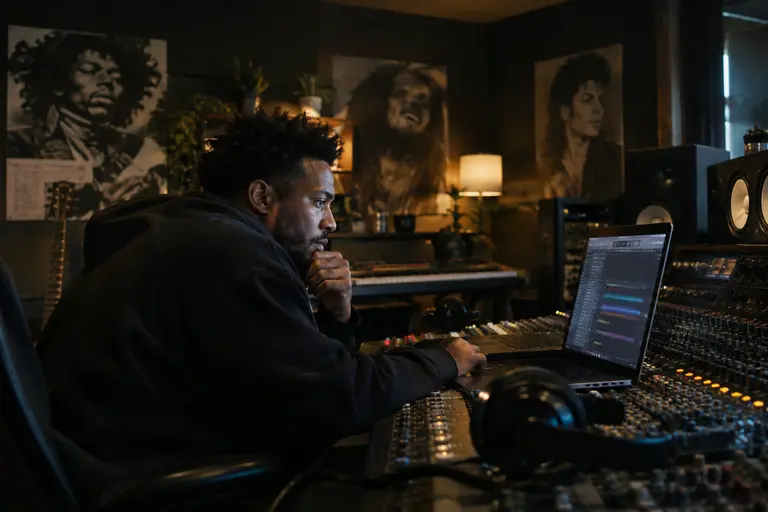
The event’s reported use of live instrumentation is another key point. R&B festivals often succeed when the band does not merely reproduce the record, but also does not bury the core song. For a producer, the lesson is to make room for human gesture. Even if the track is built in a DAW, small timing choices, guitar slides, hand-played keys, or vocal stacks with uneven edges can make a beat feel less static.
That does not mean every R&B track needs a live band. It means programmed parts can benefit from decisions that imply touch. Slight velocity changes on hi-hats, different decay lengths on percussion, and bass notes that answer the vocal can create the same kind of conversational feel that a strong live set depends on. Readers comparing this event with wider festival strategy may find our related analysis of R&B live events after Spotify’s Dallas bet useful, especially where stream-ready songs meet venue sound.
- Use legacy references as anchors, not decoration.
- Let one visual idea guide stage tone, artwork, and merch.
- Balance acoustic or band-led moments with contemporary low-end and vocal processing.
- Sequence new material near familiar emotional cues when introducing it live.
The Producer Takeaway From RNB X Live
Creative Inspiration Without Copying
The producer takeaway from RNB X Live is practical: aesthetic influence works best when it clarifies the song’s emotional purpose. The festival’s reported mix of legacy voices, newer artists, surreal playlist branding, live musicianship, and identity-focused design gives creators a model for thinking across sound and image. A beat can have a visual brief. A rollout can have a tone. A set can tell listeners how to hear the old and the new together.
That does not give producers permission to imitate an artist’s identity, likeness, or signature presentation for commercial confusion. A respectful approach studies principles: contrast, intimacy, humor, scale, lineage, and texture. If Badu’s influence suggests freedom and groove, translate that into looser timing or earthier keys. If H.E.R.’s performance language suggests musicianship and restraint, translate that into cleaner guitar space or more deliberate vocal placement. The influence becomes craft, not costume.
A Cautious Read On Influence
Because the available high-authority public sources document the festival announcement and the RNB X rebrand more clearly than every backstage design choice, the safest analysis is measured. Spotify positioned the event as a standalone R&B festival in the Dallas area, with a bill that connected established and emerging artists. The earlier RNB X brand work used surreal and humorous visual ideas. The supplied event research described live instrumentation, acoustic moments, collaborative appearances, and merch as part of the audience experience. Taken together, those facts support a clear but limited claim: the festival treated R&B as a sound, a visual identity, and a shared cultural memory.
For beatmakers and independent artists, that is the actionable part. Build the track, then ask what world it belongs to. Ask whether the drums, cover image, lighting, wardrobe, and set order are saying the same thing. For related culture coverage across this network, check out Kay Granger’s site as another resource to explore how public presentation shapes creative work. The lasting value of this festival, from my producer’s perspective, is that it showed how R&B aesthetics can support songs without reducing them to branding.