
Live Production Trends are easiest to understand from the mix position, not from a hype cycle. As a sound engineer, I listen for the practical lesson: what helped the vocal stay readable, what made the low end translate, and what stage technology changed the production choices before the first fader moved. The strongest recent evidence points to a few connected shifts: smarter source separation, spatial audio becoming more common in large rooms, and tighter links between audio, video, lighting, and automation.
The caution is that live events do not map perfectly to studio records. A 17,500-seat amphitheater, a club room, and a bedroom vocal booth ask different questions. Still, recent live production work gives artists and producers useful signals. If a show can keep vocal identity clear against drums, guitars, crowd noise, and stage volume, then a studio session can learn from the same priority: protect the source before adding spectacle.
What Live Production Trends Show Producers
Live Production Trends In The Control Room
The most useful control-room lesson is not that every producer needs the newest system. It is that production decisions are becoming more interdependent. A vocal chain, stage plot, screen cue, lighting preset, and immersive speaker map can affect one another. That changes how artists should prepare stems, sessions, and arrangements.
Those Live Production Trends matter because live sound exposes weak decisions quickly. If the lead vocal is fighting dense guitars, wide synths, backing tracks, and cymbal wash, the audience hears the conflict in real time. In the studio, a producer can hide the same conflict with editing, automation, or overdubs. On stage, the mix engineer has less room for guesswork. That pressure makes live events valuable case studies for record makers.
The Hollywood Bowl Case
One of the clearest examples came from the Hollywood Bowl upgrade reported in July 2026. The venue installed L-Acoustics Source Intelligence, an AI tool described as isolating vocals from on-stage noise, with up to 40 decibels of rejection of unwanted sound, about 20 dB more than earlier systems, along with a full L-ISA immersive surround system for the 17,500-seat venue, according to the Los Angeles Times report.
That fact should be read carefully. “Up to” is not the same as a guaranteed result in every show, on every microphone, with every band. Source rejection depends on placement, stage volume, monitor choices, microphone technique, and the behavior of the performers. Still, the direction is clear: major venues are investing in tools that treat separation as a core mix problem, not a repair task left for later.
Spatial Audio And Mix Translation
Immersion Changes Arrangement Space
Spatial audio in a venue is not only a speaker count story. It changes arrangement thinking. In stereo production, wide pads, doubled guitars, backing vocals, crowd effects, and percussion loops often compete for left-right width. In an immersive system, some of those elements can be placed around the audience, but that does not remove the need for balance. It simply gives the mixer more places to create contrast.
For studio producers, the lesson is restraint. If every element is wide, bright, moving, and reverberant, the mix becomes tiring whether it is played through headphones, a club PA, or an immersive system. Spatial formats reward clear roles: center information for lyric focus, controlled low end for weight, and movement used for emphasis rather than constant motion.
Low End Still Needs Discipline
Immersive playback does not excuse a crowded sub range. Kick, bass, low synths, toms, and effects returns still need spacing. In live work, uncontrolled low end masks words and reduces punch. In studio work, it makes masters feel smaller after limiting because the compressor reacts to energy that the listener may not perceive as musical detail.
A practical studio habit is to check the arrangement before reaching for processing. If the bass line and kick pattern leave no space for each other, a plugin will only reduce the damage. Muting parts, shortening notes, filtering effects returns, and tightening sidechain behavior often do more than adding another processor. This connects with RobSonic’s related analysis of live sound gear lessons, where system control and mix decisions sit close together.
Unified Systems Change Arrangement Choices
Audio, Video, And Lighting Are Less Separate
The production team is no longer just reacting to a band on stage. In many shows, audio cues, lighting cues, video playback, and automation are designed as one show file or as closely linked systems. Starlite’s 2026 report described integration across audio, video, lighting, and automation, including flexible lighting presets, networked DMX, and refined control interfaces for smoother scene changes, according to the Starlite trends report.
For producers, this means arrangement structure is also a show design tool. A pre-chorus lift might need a lighting change, a screen shift, and a vocal delay throw. A breakdown might need less low-frequency content so the visual impact can carry the moment. These are not purely technical choices. They affect how the audience reads the song.
Click Tracks And Stems Need Better Planning
Artists who plan to move from studio to stage should think about stem discipline early. A session with 140 tracks may work in the DAW, but a live playback system needs clear groups, stable timing, and safe fail points. Drums, bass, music beds, backing vocals, vocal effects, and count-ins should be organized so a playback tech or monitor engineer can make fast decisions.
This does not mean stripping all personality from a record. It means separating creative chaos from operational chaos. Print the special sound design. Label the stems. Leave headroom. Avoid placing essential musical information only inside a heavily processed stereo bounce that cannot be adjusted on stage. The more connected the show system becomes, the more valuable clean session architecture becomes.
What Artists Can Apply In The Studio
Start With Source Separation
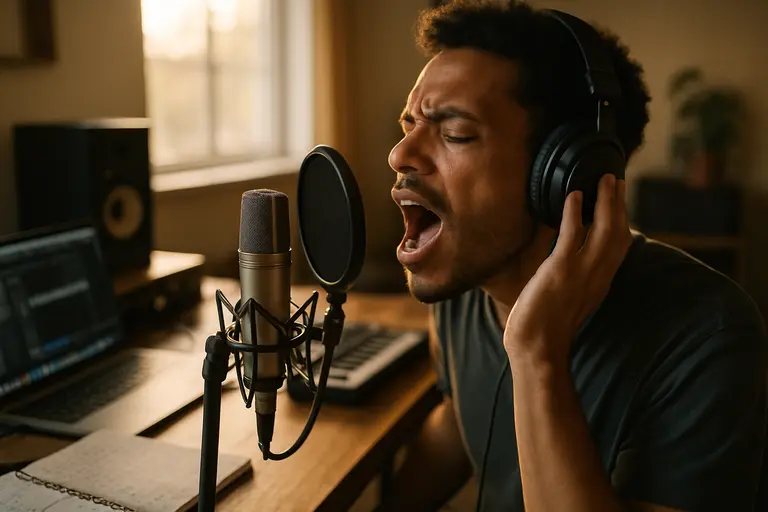
Live engineers care about bleed because bleed becomes a mix decision. Studio producers should take the same view. Record vocals with reasonable room control. Keep headphone spill down. Choose guitar tones that leave space for the singer. Avoid stacking similar synths in the same octave unless the blend has a reason. These choices make mixing easier without making the record sterile.
AI isolation may help in some live and post-production settings, but it should not become an excuse for poor capture. The safest workflow is still to record strong sources, keep noise manageable, and use advanced processing as support. If an artist’s emotional performance has the right tone, I would rather preserve it than over-process it to chase a technical ideal.
Build Dynamics Before Mastering
Recent live practice also reminds us that dynamics are part of impact. A chorus feels bigger when the verse leaves room. A drop lands harder when the buildup does not already occupy the full spectrum. A vocal ad-lib feels exciting when it is not competing with ten other featured elements.
- Leave space around the lead vocal before adding stereo effects.
- Check low-end relationships with kick and bass playing together, not soloed.
- Print alternate versions of key stems for live use, including dry and effected vocals.
- Use automation for musical focus rather than relying only on compression.
- Test a rough mix on headphones, small speakers, and a louder playback system before mastering decisions are final.
These habits are not flashy, but they scale. They help a home-produced track survive streaming playback, DJ sets, festival stages, and hybrid event mixes. They also reduce the need for emergency fixes after the song has already been released.
Current Trends In Music Production From Live Events
Keep The Human Performance At The Center
Technology can sharpen a show, but it cannot decide what the song means. The producer still has to protect the singer’s phrasing, the drummer’s feel, the tension in a synth line, or the silence before a chorus. Recent live systems give us better tools for separation, space, and synchronization. They do not replace taste.
That matters for smaller artists as much as it does for major venues. A local act may not have AI vocal isolation or an immersive PA, but the same priorities apply: reduce masking, organize stems, make arrangement choices that support the vocal, and keep the playback rig understandable. For those seeking additional insights beyond the studio desk, Shimply provides related content within the same network.
A Practical Reading Of The Trend Cycle
Treat Live Production Trends as signals, not rules. The Hollywood Bowl example shows that separation and immersive delivery have become serious investment areas at the top of the venue market. The Starlite report shows that integrated show systems are shaping how productions are built. Neither fact means every artist should chase the same setup. The smarter lesson is to ask what problem the technology solved.
For most producers, the answer is direct: capture cleaner sources, arrange with space, prepare stems with discipline, and mix for translation before chasing scale. If a track works as a song, a live system can support it. If the production is crowded, unclear, or dependent on fragile processing, a bigger system may only reveal the weakness faster.