
The CREATOR Act sits at the pressure point between artistic influence, AI image generation, and commercial identity. Introduced in the U.S. House of Representatives on June 2, 2026, as H.R. 9112, the bill would create a federal right aimed at AI-generated visual works that impersonate a specific artist’s distinctive style for commercial exploitation or public distribution. Representatives Yvette D. Clarke, Beth Van Duyne, and Valerie Foushee announced the bipartisan bill through a House announcement.
As of August 27, 2026, this is still a proposal, not enacted federal law. That distinction matters. Artists, sellers, labels, galleries, fashion makers, and tool builders should read it as a possible direction for policy, not as a rule already in force. Still, the bill is worth close attention because it tries to answer a question many creators have raised since AI image tools became widely used: what happens when a system is intentionally prompted, configured, or marketed to imitate the recognizable work of a living artist?
Why The Proposal Matters To Working Artists
Visual artists have always learned from predecessors and peers. Influence can be generous, transparent, and artistically meaningful. The concern addressed by this bill is narrower: AI output that appears to trade on the identifiable visual characteristics of a named artist in ways that may confuse viewers or affect the artist’s market. That makes the proposal different from a broad ban on inspiration. It focuses on specific artists, commercial uses, public distribution, intent, and likely viewer confusion or market harm.
For working artists, the most direct issue is economic identity. A painter, illustrator, concept artist, character designer, fashion illustrator, or poster artist may spend years building a visual signature. That signature can become part of how collectors, clients, publishers, and audiences recognize the work. If an AI system is marketed around imitating that signature, or if a seller distributes outputs that appear to be approved by the artist, the harm is not only aesthetic. It may affect licensing, commissions, print sales, gallery opportunities, and creator-commerce income.
As a producer, I hear a parallel in music. A sound can be influenced by a genre without pretending to be a specific musician. The ethical line becomes sharper when the goal is not learning from a movement but simulating an identifiable person’s artistic fingerprint for gain. Visual artists deserve that same careful distinction.
How The CREATOR Act Defines AI Style Impersonation
The bill would establish a new federal intellectual property right separate from copyright and trademark. Its target is not every AI image. Its target is “stylistic impersonation,” tied to an identified visual artist and produced wholly or in material part by an AI system. The proposed text gives artists the exclusive right to authorize or prevent certain commercial uses or public distribution of works that meet that definition, according to the official bill text.
CREATOR Act And Identified Visual Characteristics
The definition depends on distinctive visual characteristics associated with a specific visual artist. That means generic movements, broad moods, and historical categories are not the center of the proposal. A prompt or marketing claim tied to an identified artist would matter more than a general reference to a genre, period, or medium. This is a cautious framing because art develops through shared techniques, cultural exchange, studio traditions, and community practice. A law that ignored that reality could chill legitimate experimentation.
The proposal also uses a reasonable-viewer concept. In plain terms, the question is not only whether two images share color, line, texture, or composition. The issue is whether enough distinctive characteristics are combined to mislead a reasonable viewer about source, sponsorship, or approval, or to harm the commercial market of the artist. That standard leaves room for debate. Two people may disagree about what makes a style distinctive or whether a viewer would be confused.
Commercial Use, Public Distribution, And Intent
The bill’s focus on commercial exploitation and public distribution is significant. It includes exclusions for non-commercial uses and activities such as criticism, parody, scholarship, teaching, news reporting, historic works, and biographical works, provided those uses do not claim endorsement or mislead viewers about source. That makes the proposal less sweeping than some artists might want and less open-ended than some critics may fear.
Liability would also involve knowledge or deliberate avoidance. Merely owning or offering an AI tool capable of producing an impersonation would not, by itself, be enough under the research record supplied here. The conduct at issue would be closer to knowingly selling, distributing, configuring, or marketing around the impersonation of a specific artist. For studios, the CREATOR Act is a signal to treat prompt libraries, advertising language, marketplace tags, and model demonstrations as rights-sensitive materials.
Rights, Limits, And Proof Questions
If passed, the proposed right would last for the lifetime of a living artist and could be assigned or licensed by written agreement. That matters for artists who already work with agents, galleries, publishers, fashion brands, game studios, or merch partners. A written license could clarify whether a collaborator may use AI-assisted tools to generate work in a manner connected to the artist’s recognizable characteristics.
The remedy structure, as described in the research, would allow claims based on actual damages, the wrongdoer’s profits, or statutory damages as provided in the Act. That does not mean every style similarity would create a viable claim. The plaintiff would still face proof questions: what are the distinctive visual characteristics, were they intentionally invoked, did the output combine them in a legally relevant way, was there commercial exploitation or public distribution, and was there confusion or market harm?
What This Does Not Decide Yet
The proposal does not settle the broader cultural debate over influence. It does not say that artists must work in isolation. It does not eliminate parody, criticism, teaching, reporting, biography, or non-commercial expression as categories. It also does not provide a simple formula for measuring style. That uncertainty is not a minor detail. Courts, artists, platforms, and tool companies would likely argue over evidence, intent, and viewer perception if the bill became law.
First Amendment concerns would also remain central. Any rule about expression has to be read carefully when it touches satire, commentary, documentary work, fan analysis, academic study, and artistic response. A respectful approach protects artists from deceptive exploitation without turning normal influence into a legal hazard.
Practical Creative Habits For Artists And Sellers
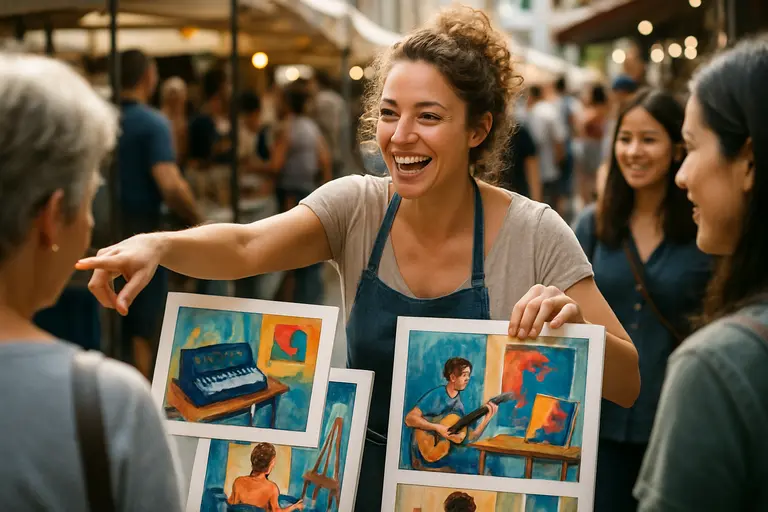
Artists do not need to wait for Congress to build cleaner studio habits. This is not legal advice, but a practical creative discipline: keep dated records of major works, sketches, palettes, release pages, exhibition notes, licensing agreements, and client approvals. Documentation will not answer every rights question, yet it can help show the development of a recognizable body of work.
For makers in fantasy fashion, cosplay-adjacent craft, handmade prints, and image-led merch, caution is especially useful because aesthetics can circulate quickly across platforms. Related creator communities, including readers who follow fantasy fashion and costume culture, often blend illustration, styling, photography, and product design. The safer commercial habit is to name inspirations honestly, avoid implying endorsement, and avoid prompts or listings that trade on a living artist’s identity without permission.
- Review product titles, tags, and ads for references to living artists whose permission you do not have.
- Use written permissions when commissioning AI-assisted variations tied to a specific artist’s recognizable work.
- Separate mood-board study from commercial claims that suggest approval, sponsorship, or source.
- Keep records of original sketches, drafts, references, and client briefs.
- Ask a qualified attorney before relying on any proposed bill for business decisions.
These habits are not anti-technology. They are pro-attribution and pro-consent. The best studio cultures I have worked in, whether in sound design or visual production, make room for experimentation while tracking who contributed what and what permissions exist.
CREATOR Act For Visual Artists And Creative Work
If the CREATOR Act advances, its value will depend on how clearly it separates deceptive AI impersonation from legitimate influence, study, parody, teaching, and criticism. The bill’s strongest idea is that a living artist’s identifiable visual language can have commercial value even when a copied image is not a direct duplicate of one existing work. Its hardest problem is proof: style is real to audiences, but hard to define with precision.
For visual artists, the practical lesson is measured but motivating. Build a recognizable voice. Document your process. License with care. Credit communities and influences honestly. Do not let fear of AI flatten your experimentation. A strong artistic identity is not only a legal concern; it is a creative anchor. Whether this proposal passes or changes, artists who understand their own visual decisions will be better prepared to protect, explain, and expand their work.