
Live Nation’s Q3 2026 results gave artists, producers, promoters, and venue teams a unusually large data set for thinking about concert strategies. The quarter ended on September 30, 2026, and the company reported 61 million fans globally, up 19% year over year, with Q3 revenue of $10.1 billion, also up 19% from Q3 2025, according to Live Nation’s Q3 2026 report. Those figures do not mean every artist can scale a tour, raise prices, or add production spend without risk. They do show where demand, venue control, sponsorship, and routing discipline were becoming more central to live music economics.
As a producer, I read these numbers less like a victory lap and more like a session file with the gain staging exposed. Attendance is the loud signal, but the quieter tracks matter: ticket mix, deferred revenue, international growth, venue throughput, and sponsorship performance. If one channel is pushed too far, the whole mix can distort. That is why the production question is not simply “bigger shows?” It is whether the live system can support scale without weakening artist identity, crew safety, audience experience, or local cultural value.
What The Q3 Data Says About Concert Strategies
Concert Strategies Start With Attendance Geography
The most useful detail in the Q3 report was geographic. International fan attendance rose 29% year over year and contributed about 60% of total fan growth, while North America attendance rose 13%. That split suggests that tour planning cannot treat international routing as a secondary extension of a North American cycle. For some artists and promoters, the better question may be whether international demand should shape the initial production design, staffing plan, and shipping model from the start.
This has practical consequences. A stage package designed only for a narrow set of domestic venues can become expensive when it has to move across regions with different venue sizes, curfews, labor structures, freight realities, and sponsorship expectations. A more modular design may protect margins while still giving fans a strong show. In sound design terms, it is like building a live set from stems that can survive different rooms rather than relying on one perfect studio mix.
There is uncertainty here. Live Nation’s data describes its own business, not the entire live music sector, and it does not prove that all international markets will keep expanding at the same pace. Still, the reported Q3 distribution gives promoters a reason to model international routing earlier and with more financial care.
Ticket Volume And Deferred Revenue Change Planning Pressure
Live Nation reported 98 million fee-bearing tickets in Q3 2026, up 10% year over year, with fee-bearing Gross Transaction Value reaching $11.2 billion, up 13%. Through late October 2026, ticket sales for shows playing in calendar 2026 reached about 170 million, up 13% over the same period in 2025 and already above full-year 2025 sales. The company also said it expected nearly 180 million fans in 2026.
That level of advance selling changes the timing of production decisions. Event-related deferred revenue was $3.8 billion in Q3 2026, up 8% year over year and described as a record third-quarter level. Deferred revenue is not the same as profit, and it does not remove execution risk. Yet it can give production teams, venue operators, and staffing partners a clearer view of demand before shows occur. That can support earlier hiring, more disciplined rehearsal budgets, and more accurate routing assumptions.
Production Economics Behind Concert Strategies
Venue Control Can Shape The Show Itself
Venue Nation hosted 26 million fans during Q3 2026, up 17% year over year. Live Nation also said Venue Nation was expected to host more than 75 million fans in 2026, representing more than 15% growth versus 2025. For the year ending December 31, 2026, the company said it was on track to open or acquire 10 large venues with capacities above 3,000, projected to deliver more than 5 million fans in 2026 with a run-rate of nearly 8 million.
For concert strategies, venue control can affect more than rent. It can shape load-in times, hospitality inventory, sightline planning, premium areas, acoustic treatment, local partnerships, and staffing consistency. A producer should care because these details influence the show’s emotional tone. A room with predictable technical limits lets creative teams design more accurately. A room with better operational data may reduce waste in lighting, video, rigging, and audio deployment.
The risk is that venue scaling can flatten difference if every space pushes toward the same premium logic. Artist communities do not all gather in the same way. A rave, a stadium pop production, a regional rock bill, and an experimental electronic night need different forms of care. A useful parallel sits in visual culture and costume communities, where fantasy fashion coverage sites remind us that audience identity is not just a sales category; it is part of the creative experience.
Stadium Growth Raises The Stakes
The research notes report that stadium attendance, including third-party stadiums, rose over 40% year over year and accounted for over half of global fan growth. That points toward a production economy where stadium-capable artists may receive even more strategic attention. Stadium shows can concentrate demand, but they also raise costs: larger crews, more complex load-ins, greater weather exposure, heavier video systems, longer sightlines, and higher expectations for crowd movement and safety planning.
For music producers involved in live direction, the creative challenge is arrangement scale. A subtle studio texture that works in headphones may disappear in a stadium unless it is re-orchestrated, reinforced visually, or given a clear spatial function. Bass design, vocal intelligibility, transition cues, and low-frequency management become economic decisions as well as artistic ones. If a 60,000-person room cannot read the emotional detail, the production spend is not doing its job.
Sponsorship, Premium Demand, And Fan Value
Revenue Per Fan Needs Creative Restraint
Live Nation reported Sponsorship & Advertising revenue of $505.7 million in Q3 2026, up 14% year over year, with Sponsorship AOI up 12%. The company also reported that international sponsorship revenue and AOI surpassed North America during the quarter. This supports the idea that brands may keep seeking deeper roles in live music, especially outside North America.
That does not mean every show should add more branded surfaces or VIP layers. Premium experiences work best when they respect the artist’s world. A hospitality package, side-stage viewing area, or upgraded venue service can feel additive if it improves comfort without crowding the core audience. It can feel extractive if it divides fans too aggressively or distracts from the performance. The economics are real, but so is the cultural cost of getting the tone wrong.
Concert revenue in Q3 2026 was about $8.7 billion, up 20% year over year, and Concerts AOI rose 17% year over year to about $602.9 million. Those figures show that scale and margin moved together in the quarter, but they do not guarantee that every production upgrade will pay back. Lighting rigs, immersive screens, extended staging, and custom audio design should be evaluated against routing, venue type, rehearsal time, and artist differentiation.
Primary Ticketing Data May Influence Production Risk
The Q3 data showed fee-bearing ticket growth driven by primary ticketing, while the research notes state that secondary ticket Gross Transaction Value was flat with lower concert resale. That detail may matter for future tour planning because primary demand gives promoters and artist teams more direct information about pricing, city strength, and sell-through timing. It may also support anti-scalping efforts, presales, and pricing structures that keep more value inside the primary system.
This is not a simple fairness fix. Ticketing remains a sensitive subject for many fan communities, and production teams should avoid treating demand signals as permission to push every price ceiling. A cautious reading is better: primary data can help match show count, venue size, and production spend to demonstrated demand. It can also reduce the temptation to overbuild a show based on hype rather than committed buyers.
Routing, Local Economies, And Production Discipline
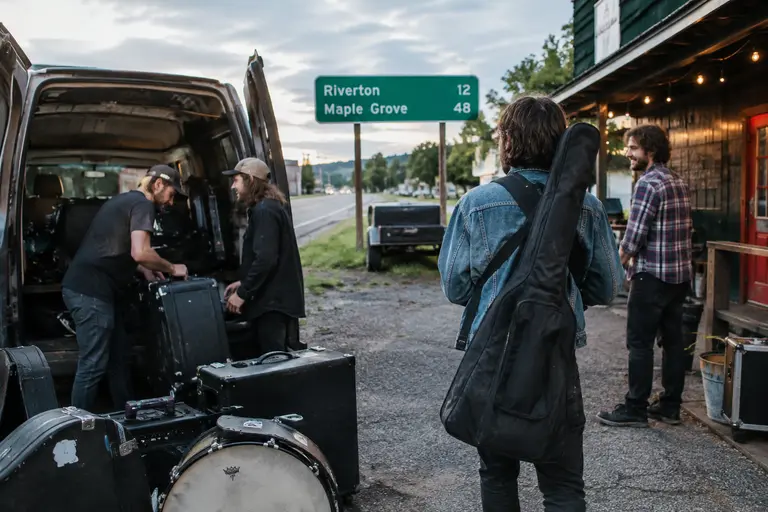
High attendance makes routing efficiency more valuable. If global demand is strong, poorly planned routing can burn margin through freight, overtime, duplicate gear, rushed rehearsals, and crew fatigue. Better routing can support both economics and artistry: fewer panic decisions, cleaner changeovers, and more time for sound checks that actually solve problems.
Local effects deserve care as well. Large concerts can affect hotels, vendors, labor, transportation, and public services, but those effects vary by market and event type. Weather and cancellation risk can also change the financial picture for towns and crews, a point connected to RobSonic’s reporting on festival cancellations and local music economies. If promoters use stronger advance demand data to plan, the benefit should include more realistic contingency planning, not just larger builds.
- Design stage systems that can scale across regions without losing the artist’s identity.
- Use advance ticket data to test venue size and show count before increasing production spend.
- Model freight, crew rest, local labor, and weather risk as part of creative planning.
- Keep premium experiences aligned with the audience culture around the artist.
Live Nation Q3 Attendance And Concert Strategies
Live Nation’s record Q3 2026 attendance does not offer a universal formula, but it does point to a more data-sensitive era for concert strategies. International growth, stadium demand, Venue Nation throughput, sponsorship performance, primary ticket volume, and deferred revenue all push production planning toward earlier decisions and sharper financial modeling.
The creative lesson is not to make every tour bigger. The better lesson is to make each tour more intentional. Some artists need stadium architecture and large-scale visual rhythm. Others need rooms where community, sound, and intimacy carry the night. The Q3 numbers show that demand existed at major scale inside Live Nation’s system during the quarter ended September 30, 2026. The art will be deciding where scale serves the music, and where restraint keeps the performance human.