
High Museum gear coverage needs a correction before any equipment judgment can be made: the available research did not confirm a specific High Museum of Art event called Photography as a Way of Life that introduced, demonstrated, or announced new music-production tools. That matters for a gear review. If no product list, installation spec, sound-system rundown, or artist tech sheet is verified, the honest review is not a verdict on devices. It is an evidence check on what was actually documented around the museum’s 2026 photography and art-music programming.
For producers, beatmakers, and live-event artists, that may sound less satisfying than a rack-by-rack report. Still, it is more useful than treating a museum program as a trade show without proof. The confirmed record points to photography programming and one art-music conversation, not a gear launch. That distinction keeps expectations fair to the museum, the participating artists, and readers trying to make buying or rental decisions.
What High Museum gear Coverage Can Confirm
High Museum gear Claims Need Evidence
The key finding is simple: no credible source in the provided research confirmed that a Photography as a Way of Life event at the High Museum of Art centered on music-production equipment. That does not mean no audio tools were used in the building. Museums routinely use microphones, playback systems, projectors, computers, and event PA support. It does mean there is no verified basis here for naming specific controllers, DAWs, samplers, monitors, mixers, interfaces, or immersive audio systems as part of that alleged event.
That evidence gap is especially important in gear writing. A production tool should not receive praise or criticism unless its use case is known. Was it used for playback, live beat construction, dialogue reinforcement, archival listening, or audience interaction? Was the room acoustically controlled or an open gallery? Was the system house-provided, artist-provided, or rented for one program? None of those details were confirmed for the named topic.
The Confirmed Photography Context
The confirmed photography item in the research was the High Museum exhibition New Acquisitions: Photography, which ran from June 12 to September 6, 2026, according to a Roswell Photographic Society notice about its June 27, 2026 field trip to the show RPS field trip notice. That source supports the exhibition dates and the photography focus, but it does not document music-production gear.
From a production standpoint, that narrows the review. Photography exhibitions can influence music makers through pacing, texture, framing, and atmosphere, but those are creative references rather than equipment claims. A producer could leave a photography show with ideas about negative space, sequencing, or visual rhythm. That is valid artistic influence. It is not the same as a confirmed gear update.
Where Music Actually Entered The Program
The August 22 Art And Music Conversation
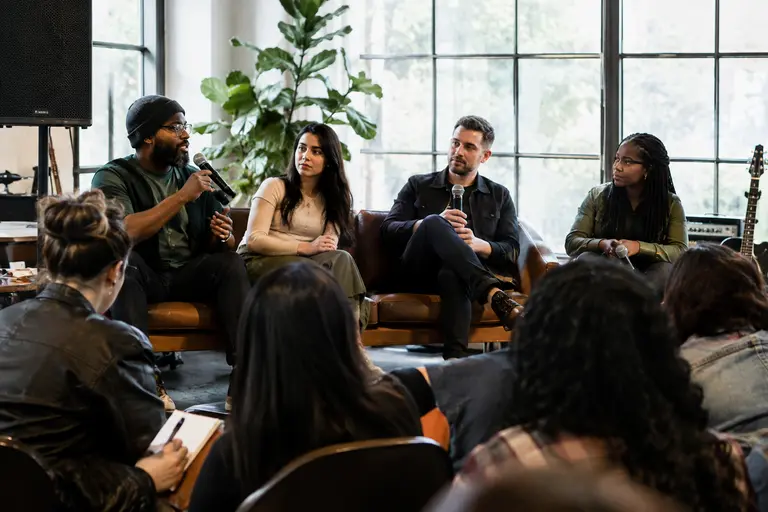
The clearest music-related item in the research was not framed as a gear launch. An Art & Music Conversation was held on Saturday, August 22, 2026, at the High Museum of Art in Atlanta. The listing described a live beat breakdown by Tane Runo and painter Tariku Shiferaw analyzing the abstract work Element (Kendrick Lamar), with attention to the intersection between visual abstraction and music culture Art & Music Conversation listing.
That is meaningful for music creators, but it points toward process rather than product. A live beat breakdown can reveal arrangement logic, sampling choices, rhythmic feel, or how a producer thinks about structure. Yet the listing did not name an MPC, laptop rig, DAW, controller, interface, monitor chain, or playback format. Without those specifics, a responsible reviewer cannot say what was new, what sounded better, or what gear artists should consider buying.
Why A Beat Breakdown Is Not A Product Demo
A beat breakdown and a product demo can look similar from a distance because both may involve a screen, pads, audio playback, and commentary. The goals are different. A product demo is usually designed to prove features: latency, routing, sample handling, controller mapping, onboard effects, or integration with a DAW. A beat breakdown is usually about creative decision-making. It can be valuable without telling readers whether a device is reliable onstage or worth its asking price.
That difference protects artists as much as readers. If an artist appears at a museum program, it should not be assumed that every visible tool is an endorsement or that the event introduced new hardware. Many creators use familiar rigs because they are stable. Others use venue-provided playback because the event format demands it. A cautious review respects those practical realities.
Why High Museum gear Was Not The Story
Museum Events Often Prioritize Context Over Specs
The confirmed programming placed art, abstraction, photography, and music culture in conversation. That framing is closer to arts interpretation than a gear expo. For producers, the useful lesson is not “buy the device from the event,” because no device was documented. The lesson is to separate creative inspiration from equipment evidence.
That separation is not anti-gear. It is the basis for better gear choices. If a museum event inspires a producer to build a gallery-style ambient set, the next step is to define the technical need: portable playback, reliable stereo imaging, discreet microphones, low-noise field recording, or tactile beat control. Those needs can then be matched to actual products with published specifications and real tests.
What Would Have Made This A Real Gear Review
A true High Museum gear review would need a few verified details. The most useful items would be an official event page naming the production tools, a tech rider, an artist interview focused on workflow, a venue audio description, or a credible report from staff or production partners. Even a simple list of hardware and software would change the article from evidence caution to performance analysis.
- For beat production: the DAW, controller, sampler, audio interface, and monitoring setup would matter.
- For installation audio: speaker layout, playback computer, routing, amplification, and calibration method would matter.
- For live conversation: microphone choice, mixer, room reinforcement, and recording chain would matter.
- For interactive work: sensors, MIDI or OSC routing, latency control, and fail-safe playback would matter.
Without those facts, any claim about “what’s new” would be guesswork. That is where gear coverage should stop rather than fill the gaps with assumptions.
Practical Lessons For Producers Covering Museum Events
Start With The Room Before The Rig
Museum spaces can be beautiful but challenging for sound. Stone, glass, high ceilings, reflective walls, open thresholds, and visitor movement can all affect intelligibility and bass control. The research here does not provide room or system details for the High Museum programs, so no specific acoustic claim should be made. The broader production lesson is still practical: the room often decides whether a compact rig feels clear or underpowered.
Artists planning similar art-music settings should ask for venue information before renting or packing gear. A small controller and laptop may be enough for a talkback-supported beat breakdown. A performance with live vocals, sub-bass, or audience movement may need a more defined PA plan. If the event involves visual art, speaker placement also has to respect sightlines and visitor flow.
Use Visual Art As A Production Reference, Not A Gear Receipt
Photography can still help music makers. Cropping can suggest arrangement edits. Contact-sheet logic can inform variations across a beat. Contrast can inspire choices between dry percussion and reverberant texture. Repetition in image series can push producers to think about motif, return, and interruption. Those are valid studio takeaways from a photography show, even without a single new product on display.
For readers interested in comparing art-event production across a wider network, visit Next Clues for related cultural context and extended coverage.
High Museum gear Review Takeaway
A fair High Museum gear review of this topic has to be modest. The confirmed 2026 record supports a photography exhibition, New Acquisitions: Photography, and an August 22, 2026 art-music conversation involving a live beat breakdown and analysis of visual abstraction in relation to music culture. It does not support claims that a Photography as a Way of Life event introduced new music-production equipment at the High Museum.
For producers, the practical value is a filter for future coverage. If an art event lists a beat breakdown, ask what workflow was shown. If a museum announces an installation with sound, ask what playback and monitoring system was used. If a program claims interactivity, ask how control data moved and how latency was handled. Those questions turn art-world interest into useful gear reporting.
Until a verified equipment list appears, the safest reading is this: the High Museum’s documented 2026 programming offered cultural and creative context for music makers, not a confirmed new-gear showcase. That may be less flashy than a product reveal, but it gives artists better information. Inspiration can come from a gallery wall; purchase decisions should wait for named tools, tested workflows, and documented performance.