
AI Music Rights are no longer a side concern for producers who treat software as part of the creative instrument. They now sit inside decisions about sample libraries, generative plugins, stem tools, video scoring workflows, client delivery, and session documentation. As a producer, I do not see permissions as a brake on imagination. I see them as part of the signal chain: invisible until they fail, then suddenly loud.
The best supported data we have does not say every producer uses AI tools the same way. It does show that AI-generated audio has entered real publishing workflows. In the 2026 In Sync: Music and Video report, a survey of 1,003 U.S. creators, musicians, and music supervisors found that 32.7% had used AI-generated music as the final audio track in published content; the same report found that 75.3% of musicians felt pressure to create video content alongside their music, while 92.2% integrate their own original music into video projects, according to Berklee’s In Sync report.
Those numbers matter because music production tools are not only sound-making devices. They are now publishing tools, video-support tools, client-delivery tools, and rights-management touchpoints. If a producer cannot explain what a generated cue is cleared for, where its inputs came from, or whether a client can safely monetize it, the tool has created friction even if the sound is useful.
Why AI Music Rights Now Shape Production Tools
AI Music Rights As A Workflow Signal
AI Music Rights function like a workflow signal because they tell a producer what can move forward, what needs review, and what should stay in the sketch folder. A synth preset rarely asks the producer to think about permission. A drum loop might require a license check. A generated vocal texture, lyric-assisted cue, or full AI music bed can raise a wider set of questions about inputs, output terms, attribution, and client use.
This does not mean every AI-assisted sound is unusable. It means the tool has to make its terms visible at the point of creation, not after the track is exported. A producer should not have to stop a session to decode unclear commercial-use language. Good product design can place permission information near the action: inside the browser, export window, project notes, stem labels, or delivery report.
What The Survey Data Can And Cannot Prove
The Berklee survey supports a cautious reading: AI-generated music is already present in published content, and music-video workflows are tightly linked for many creators. It does not prove that all AI audio is cleared correctly, nor does it show which tools dominate usage. That distinction matters. Producers need evidence, not panic.
Still, the overlap between music and video is practical. A beat may start as a track, then become a reel, ad, live visual teaser, short-form clip, or paid brand asset. Costume makers, fantasy stylists, and visual creators face similar permission questions around imagery, aesthetics, and commerce; readers who follow that side of creator culture may recognize related concerns through fantasy fashion and costume culture. For music producers, the lesson is direct: rights clarity travels with the asset.
Permissions Are Becoming Product Design
Licensing Clarity Changes Creative Risk
Licensing confusion has measurable business consequences for creators. In a May 28, 2026 report from Epidemic Sound, 73% of creators said unclear licensing could limit future business opportunities, and 53% said copyright or licensing issues had already affected brand deals or monetization opportunities, according to Epidemic Sound’s creator report.
For toolmakers, that finding points to a product requirement rather than a marketing slogan. If creators fear unclear licensing, then an AI music product has to communicate permissions in plain language. That could include whether outputs may be used commercially, whether attribution is required, whether the user receives any indemnity, whether generated stems have the same terms as full mixes, and whether terms change between free and paid plans.
For producers, the motivational point is simple: clarity protects momentum. Nothing drains the energy from a session like finishing a cue and then realizing nobody is sure whether it can be delivered. A permission-aware setup lets artists take more creative risks because the administrative risk is being tracked.
Metadata Belongs Near The Sound
AI Music Rights become easier to manage when metadata follows the audio. If a generated pad, vocal chop, or full cue enters a DAW without meaningful notes, the producer has to reconstruct the story later. That is poor creative hygiene. Session files should preserve tool name, date, project role, license tier if relevant, prompt or source description when allowed, stem status, and export terms.
This is where production tools can improve without trying to become legal systems. A DAW or plugin could store permission notes inside a clip, region, project panel, or export manifest. A sample manager could flag AI-generated material separately from recorded audio. A collaboration platform could preserve who added a generated asset and when. These are not glamorous features, but they can save a producer from confusion at delivery time.
RobSonic readers comparing permission models may also find value in a separate discussion of AI music licensing checks, especially where metadata, patents, and permissions intersect. The key habit is not fear. It is documentation while the creative memory is still fresh.
How Producers Can Keep Creative Control
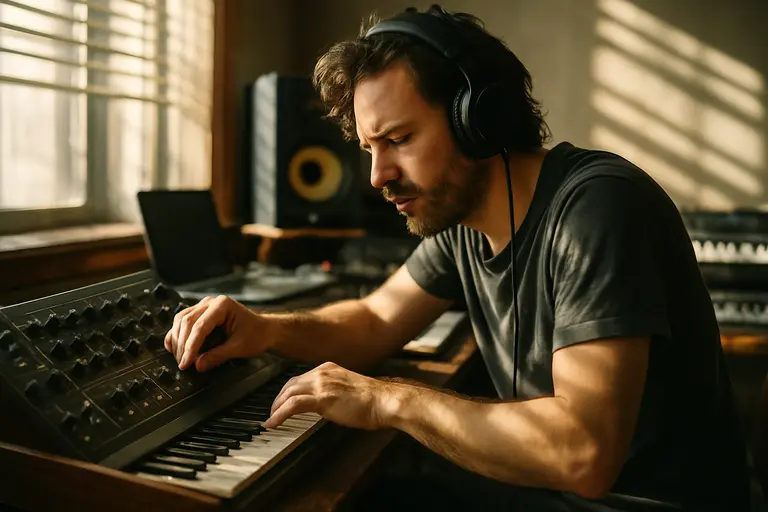
Build A Permission-Aware Session Habit
A useful studio habit is to divide AI-assisted material into roles. Is it a private sketch? A temporary reference? A processed texture? A final cue? A client-facing stem? Each role carries a different risk profile. A weird generated rhythm used only to spark a bassline is not the same as an AI-generated music bed exported as the final audio track for a paid campaign.
Producers can keep this manageable with a short checklist:
- Label AI-generated assets clearly inside the DAW session.
- Save the tool name, date, and license tier beside the audio file.
- Separate private sketches from deliverable stems.
- Read export and commercial-use terms before client delivery.
- Use human performance, arrangement, editing, and mix decisions as audible creative signatures.
This habit is not glamorous, but neither is gain staging. Both protect the work. Clean rights notes let the emotional part of production stay open because the practical part has a home.
Keep Human Taste At The Center
AI tools can generate options quickly, but taste remains the producer’s strongest instrument. The question is not only whether a tool can produce a usable sound. The question is whether that sound serves the song, respects the project’s community, and can be explained to collaborators. A producer’s edit, silence, rejection, restraint, and arrangement choices still define the record.
AI Music Rights should not push artists into sterile production. They should encourage clearer creative boundaries. If a vocalist is central to the identity of a track, do not bury that identity under generic generated gloss. If a handmade scene, cosplay event, indie game, dance collective, or artist-led campaign asks for music, the cue should support that community rather than flatten it into anonymous content.
From a sound design angle, permission-aware production can even lead to better music. Producers may record more original textures, resample their own instruments, build custom percussion from field recordings, or process personal voice notes into pads. Rights limits can push us toward more specific sounds. Specificity is where records start to breathe.
AI Music Rights In Production Tools
AI Music Rights are changing production tools because creators need both speed and confidence. The supported data shows AI-generated music has already been used as final published audio by a notable share of surveyed creators, while licensing uncertainty has affected monetization and brand work for many creators in the Epidemic Sound report. That combination gives toolmakers a clear challenge: do not only make generation faster; make permission status easier to see, save, and share.
For producers, the practical path is balanced. Use AI-assisted tools where they genuinely help the track. Keep notes before memory fades. Treat unclear outputs as sketches until terms are understood. Preserve human taste through performance, editing, arrangement, and mix decisions. A beautiful record is not only a file that sounds good. It is a creative decision trail that can survive delivery, collaboration, and release.