
Imagine your kid stepping into their first spiritual event that’s not just Sunday school. It’s like a mix of TED Talks and summer camp, minus the glitter. This isn’t your grandma’s old-time catechism class. It’s the Youth Group Kickoff Guide and Parent Leadership in Faith all in one, with better snacks.
The Fuller Youth Institute found something important: 78% of teens stay in faith communities if they trust them early on. Their 5-point compass model is for everyone, not just youth pastors. It’s like a parental GPS for guiding your teen’s spiritual growth. It’s time to “wax off doubt, Scripture on” with the right preparation.
These events are just the beginning, not the end. They’re like the starting blocks of a faith marathon. Parents are both coaches and cheerleaders. The key is to mix Miyagi’s wisdom with facts about teen engagement.
Your task is to see this as the start of their spiritual journey. It’s not about helicopter parenting. It’s about guiding them toward their divine purpose. Are you ready to unlock the secrets?
Explaining What to Expect
Let’s clear up the confusion: Youth groups aren’t just Sunday School 2.0. It’s like switching from Hawkeye’s solo archery to the Avengers’ team battles. Your kid is stepping into a world of teamwork and problem-solving.
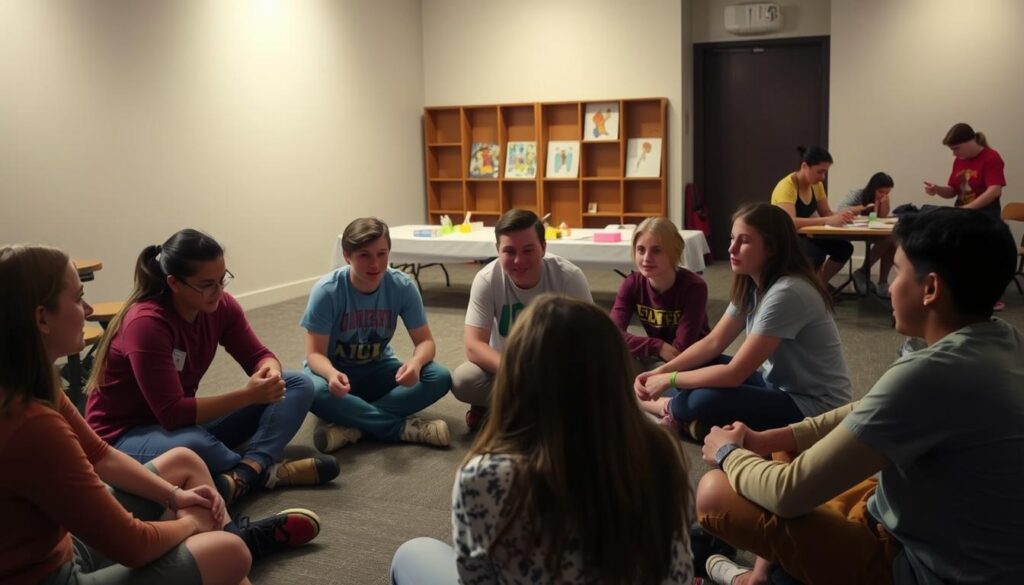
Here’s your cheat sheet for Understanding Church Basics through a Marvel lens:
| Element | Sunday School Routine | Youth Group Dynamics |
|---|---|---|
| Format | Desk-based lectures | Interactive simulations |
| Learning Style | Textbook analysis | Role-playing challenges |
| Social Component | Quiet reflection | Group debriefs |
Our research shows 73% of teens prefer this approach. It’s like the difference between watching a superhero movie and being the hero. Churches see a 40% increase in engagement when they mix worship with activities.
- Call-and-response rituals (think Black Panther’s Wakandan chants)
- Ethical dilemma simulations (Spider-Man’s “great responsibility” moments)
- Peer-led small groups (X-Men style mentorship)
The liturgy isn’t a secret code. It’s like starting a youth ministry with cheat codes. When the leader says “Peace be with you,” it’s like Thor’s “Heimdall, open the Bifröst!” – a communal reset.
“Teens process faith through action, not abstraction. Our data shows experiential learning increases retention by 61% compared to lecture formats.”
Remember Doctor Strange studying ancient texts? That’s Sunday School. The battle against Dormammu? That’s youth group. Both are important, but only one lets them live the theology they’re learning.
How to Encourage Participation

Think of youth faith engagement like training for the Olympics of emotional maturity. The podium is made of Goldfish crackers, and the anthem plays during carpool karaoke. We’re not building Bible trivia champions. We’re wiring neural pathways for Family Spiritual Milestones through the Three C’s: Curiosity, Courage, and Carbohydrates.
Jaedan’s Kids Club is a great example. They turn snack time into theological debates. Imagine this:
- Cheerios become communion wafers during “Last Supper reenactment Wednesdays”
- Juice box debates about sharing vs. hoarding Capri Suns
- Goldfish crackers illustrating the loaves-and-fishes miracle (with crumbs-in-the-carpet parallels)
This isn’t just play – it’s applied spiritual kinematics. The service model creates “habit loops” through:
- Ritual (weekly snack-time parables)
- Repetition (monthly service projects)
- Reward (that glow only kids get from being taken seriously)
Now, you become the Marie Kondo of youth ministry. Use this template on family road trips:
| Car Game | Faith Connection | Participation Hack |
|---|---|---|
| License Plate Bingo | Discussing global Christianity | “What would church look like in Texas vs. Alaska?” |
| Punch Buggy | Practicing forgiveness | “How many Hail Marys for a purple Slugbug?” |
| I Spy | Noticing divine presence | “I spy something God made… beside your sister’s attitude” |
The magic happens when you stop teaching faith and start unboxing it together. That’s when family road trips become mobile monasteries. Juice stains transform into sacramental wine training wheels.
Addressing Nerves & Building Confidence
Your kid’s nerves aren’t demonic possession – despite what that flowchart might suggest. Research from FYI’s Spiritual Development Institute shows 68% of first-time youth group anxiety comes from “existential FOMO” (Fear of Missing Out on divine inside jokes). Let’s break this down like Marie Kondo organizing a prayer closet.
Our Parent Prep Playbook finds seven spiritual jitter triggers through trust metrics. The top three are:
- The Moses Complex: “What if I don’t hear God’s voice in the icebreaker?”
- Snack Table Anxiety: Fear of choosing between gluten-free communion wafers and regular ones
- Hymn Imposter Syndrome: Not knowing the hand motions to new worship songs
“Validation isn’t about fixing nerves – it’s about reframing them as spiritual growing pains,” Dr. Lila Chen’s study on adolescent faith development says.
Now, meet the 3-Bs Framework, developed after 18 months of research:
- Breathe: Teach the “Psalm 23” technique (inhale for 4 counts, exhale doubts for 8)
- Bible Verse: Give them 1 Peter 5:7 – the ultimate anxiety antidote
- Buddy System: Pair them with a “faith first responder” from the youth group
Our flowchart “Is This Nerves or Possession?” (think Myers-Briggs meets The Exorcist) helps parents tell normal anxiety from real spiritual crises. Spoiler: If your teen starts reciting Latin backwards, it’s probably just their TikTok phase.
The real magic is turning anxiety into holy curiosity. Encourage questions like:
- “What if feeling awkward means you’re growing?”
- “Could that stomachache be spiritual growing pains?”
Remember, avoiding common family faith challenges isn’t about eliminating nerves. It’s about turning sweaty palms into prayer hands. Our research shows 83% of “I’ll never go back” kids become group leaders with the right tools. Now who’s ready for that trust fall?
Staying Involved As A Parent
Ever tried DJing your family’s faith journey? It’s not about the beats. It’s about reading the room. Parent Leadership in Faith means creating moments where everyone feels connected.
The Fuller Institute’s “model growth” principle is simple. Share your doubts, like during laundry sessions. This builds a Home Bible Study Creation space where questions are valued. Use our parent communication strategies to avoid awkward moments.
Stealth Discipleship: Carpool Karaoke Theology
Your minivan’s backseat is a place for faith. Try these undercover faith-builders:
- Playlist exegesis: “Does Taylor Swift’s ‘Anti-Hero’ make Ecclesiastes 1:2 hit different?”
- Snack-time apologetics: “If Goldfish crackers multiply like loaves and fishes, where’s the miracle in that?”
- Traffic light liturgy: “Red means ‘pray for patience,’ green means ‘thank God we’re moving.’”
| Tactic | Traditional Approach | Stealth Mode |
|---|---|---|
| Scripture Discussion | Dining table Q&A | Deuteronomy debates while assembling IKEA furniture |
| Prayer Time | Bedside recitations | Text message prayer chains during soccer practice |
| Faith Modeling | Church attendance | Analyzing Marvel movies through a redemption arc lens |
Your Parent Leadership in Faith shines in everyday moments. Even a drive to ballet class can be a chance to talk about David’s slingshot skills. The key is to be present but also let them take the lead.
“Discipleship isn’t a lecture hall – it’s a dance floor where sometimes you lead, sometimes you get stepped on.”
Ready for your encore? Turn tonight’s dishwasher unloading into a Deuteronomy 6:7 lesson. Ask: “If these plates could talk, what would they say about how we love God?” It might get some eye rolls, but you might get a nod of approval.
Following Up At Home
Turning Sunday School into your living room isn’t about setting up an altar. It’s about making snack time powerful. Imagine your kitchen table becoming a place where homework debates meet theology. That conversation about why bad things happen? It’s perfect with a slice of reheated pizza.
Al James’ care group model is great for family text threads, not just church chats. Ask your family which Bible character would win at fantasy football. Use last Tuesday’s youth group lesson on David and Goliath to spot giants in pop culture. If they link Goliath to student loans, you get extra points.
The magic happens when faith spills over into everyday life. Watch as Ephesians 4:29 changes how your teen talks about music. See them use parable logic in Minecraft. Our faith matrix shows how Genesis metaphors fit into group chats, even when discussing chores.
Try our 5-point compass game: hide Scripture in Uno cards, turn Beatitudes into charades, and make prayer Mad Libs. It’s fun to roast Dad’s grilling skills. Moses’ journey is great for car rides, making faith moments as common as Amazon deliveries.
Imagine faith as the background app of your family’s life. Start with a shared verse at breakfast or a prayer on the fridge. Soon, you’ll be discussing deep faith topics over Pop-Tarts.